



From Mitre to Velvet: The Evolution of Santa’s Suit Design
Publicado el 25 December, 2025
When we think of the most influential fashion design in history, we rarely look to the North Pole. However, Santa Claus's suit is a fascinating case study of how a garment evolves over centuries. How did it go from being liturgical attire in the Middle East to a Nordic fur ensemble, and finally, to the velvet icon that defines modern Christmas?
At Waixo, we analyze the construction, materials, and pattern making behind the character, breaking down the design stages that created Santa Claus.


1. Ecclesiastical Design: The Bishop's Silhouette (4th - 17th century)
The origin of the design doesn't begin with a coat, but with a tunic. Based on Saint Nicholas of Myra, Santa Claus's first "costume" was purely religious.
- The pattern: It was characterized by superimposed layers, typical of Byzantine vestments: a long tunic down to the feet and a heavy chasuble over it.
- The head: He did not wear a pompom hat, but a mitre (the tall, pointed hat of bishops).
- The palette: This is where red originated. Not for marketing, but for ecclesiastical hierarchy, often combined with gold and white.
2. Functional Design: Furs and Wools (Nordic Influence)
When the legend traveled to northern Europe and merged with folklore (such as the English Father Christmas), the design of Santa Claus's suit underwent a severe climatic adaptation. Religious aesthetics gave way to functionality.
- Materials: The design prioritized protection against the cold. Illustrations from the era show undyed animal fur garments, thick wools, and green cloaks, symbolizing perennial nature in winter.
- The change in silhouette: The rigidity of the mitre was abandoned for soft hoods or ivy crowns, giving the character a more organic and less solemn appearance.
3. The Victorian Revolution: Defining the Modern "Suit"
The 19th century was the definitive design laboratory for Santa Claus. It was here that the character ceased to be an ethereal entity and became someone who needed a real wardrobe.
- Clement Clarke Moore (1823): In his literature, he introduced texture. He described a character dressed "all in fur," stained with soot, moving him away from the bishop's neatness.
- Thomas Nast (The Graphic Designer): This illustrator is the true architect of today's Santa Claus suit. Nast redrew the silhouette: he separated the tunic into two pieces (jacket and pants), added the wide leather belt to structure the round figure, and popularized the color red over brown or blue variants, seeking visual contrast on printed paper.
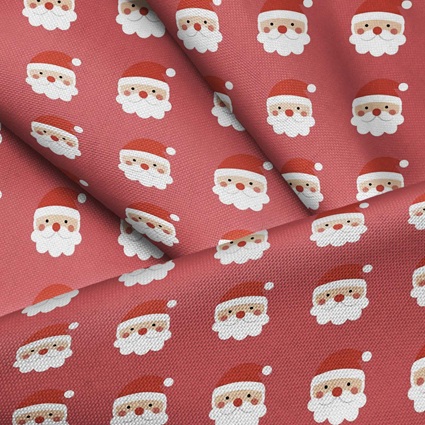
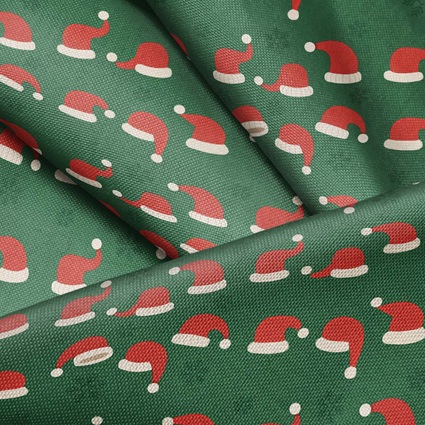

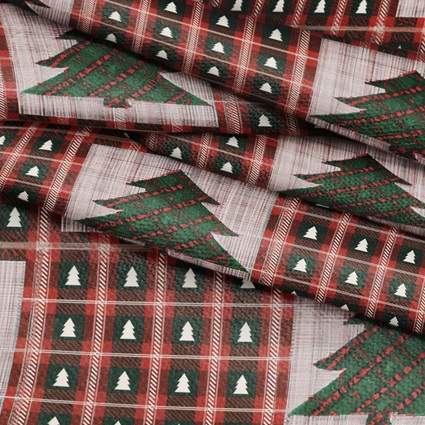
4. The Industrial Standard: Textures and Finishes (20th Century)
In the 1930s, illustrator Haddon Sundblom (for Coca-Cola) didn't invent Santa Claus, but he did refine the textile design with almost photorealistic quality.
- The texture: Sundblom defined the fabric. It was no longer rough wool or wild fur; the suit took on the appearance of luxurious velvet or soft felt, with immaculate and voluminous white fur trim.
- Accessories: He standardized black riding boots (patent leather or leather) and the belt with a large buckle, design elements that balanced the large mass of red color.
Reinterpret Santa Claus's suit with Waixo
Understanding the evolution of design allows you to break the rules this Christmas. Santa Claus's suit is not immutable; it's a foundation for creativity. If you have a fashion or decor brand, get inspired by these historical stages:
- "Heritage" Style (19th Century): Design prints that mimic hand-woven wool textures, tartan plaids, or deep green tones on our Twill base, evoking the most rustic and authentic Santa Claus.
- Ecclesiastical Luxury: Reclaim the origins with damask prints in red and gold. Our velvet is the perfect base for cushions or table runners that exude that historical opulence.
- The Pop Version: If you prefer the modern classic, use shiny bases like Satin to replicate the vibrant and saturated red of the 20th-century design.
These materials allow you to create easy gathers or drapes that conceal and flatter, ideal for New Year's Eve.
Conclusion
Santa Claus's suit is much more than a Christmas costume; it's a compendium of design history that unites religious solemnity, the need for warmth, and advertising aesthetics. From the bishop's tunic to the current two-piece ensemble, its evolution teaches us that design always responds to its context.
This Christmas, at Waixo, we invite you to write the next chapter of this textile story with your own designs.