Close
Click or press [Enter] to view the results
Trends


Printed Fabrics View articles
Telas en Colores Lisos View articles
Telas para Imprimir View articles
Trends
Printed Fabrics View articles
Telas en Colores Lisos View articles
Telas para Imprimir View articles


Elige colores lisos a juego con tu estampado favorito. ¡Selecciona aquí alguno de los colores principales!
| Material: | 97% Polyester, 3% Elastane |
| Width (cm): | 146 |
| Grammage (g/m²): | 95 |
| Pattern: | Brushstrokes, Painting, Street art, Abstract, Light |
| Features: | Brilliant, Smooth, Thin |
| Application / Use: | Shirts, Blouses, Kimono, Accessories, Monkeys |
| Manufacturing Method: | Single-sided digital textile printing, all products are custom-made to order. |
| Care: |
     |
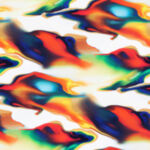
The satin fabric, called Raso-Ámsterdam, has a shiny visual texture and a soft, smooth feel, thanks to its 100% polyester composition and a weight of 120 gr/m2. The printed design on the fabric features a blend of attributes, such as abstract brushstroke technique and street art aesthetics, resulting in a modern and fresh feel with an artistic touch that catches every eye. Additionally, the design boasts a main multicolor palette, which leads to a perfect combination with neutral tones like white or black, or more daring shades like navy blue or intense red.
The fabric is digitally printed with the design on one side only, which means it is not a double-sided printed fabric, but rather printed on only one side. Regarding the general characteristics of the fabric, it is suitable for making garments such as shirts, blouses, jumpsuits, dresses, skirts, pants, tops, and pajamas. It can even be used for making kimonos, bridal lingerie, and accessories such as scarves. Thus, it is a very versatile fabric that adapts to the needs of all types of consumers.
Regarding the care instructions for the Raso-Ámsterdam fabric, it should not be bleached, and it is recommended to wash it at a maximum temperature of 40ºC. Likewise, the fabric allows dry cleaning, except with trichloroethylene, and should be ironed at a warm temperature. If a dryer is used, it should be set to a reduced temperature.
Finally, the printing technology used for the manufacturing of this fabric is sublimation (polyester), which consists of transferring ink from a printed paper to the fabric through a process of heat and pressure. This allows the ink to integrate into the fabric fibers, ensuring greater durability and resistance to washing and wear.