Close
Click or press [Enter] to view the results
Trends


Printed Fabrics View articles
Telas en Colores Lisos View articles
Telas para Imprimir View articles
Trends
Printed Fabrics View articles
Telas en Colores Lisos View articles
Telas para Imprimir View articles


Elige colores lisos a juego con tu estampado favorito. ¡Selecciona aquí alguno de los colores principales!
| Material: | 82% Polyester, 18% Elastane |
| Width (cm): | 150 |
| Grammage (g/m²): | 270 |
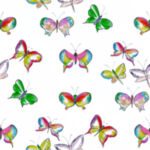
| Pattern: | Butterflies, Very Simple, Animals, Light |
| Features: | Elastic, Chlorine Resistant, Very High UV Protection 50+ |
| Application / Use: | Body, Swimsuit, Bikinis, Jersey, Tights / Leggings |
| Manufacturing Method: | Single-sided digital textile printing, all products are custom-made to order. |
| Care: |
     |
Polyester Lycra - Nairobi is an elastic fabric with a weight of 270 gr/m2 and a composition of 82% polyester and 18% elastane. This fabric is designed for use in lingerie, sportswear, and swimwear, such as bikinis, swimsuits, tights, leggings, and leotards. The designs printing technology is sublimation, making the colors vibrant, chlorine-resistant, and UV-protected. The animal and insect design is very simple and consists of butterflies in cotton white, lavender purple, and algae green. This design can be combined with other solid pastel colors to create a soft and elegant ensemble.
Polyester Lycra - Nairobi, printed with the single-sided digital textile design, features texture, feel, and elasticity that make it very comfortable to wear and allow great freedom of movement. It also has a chlorine-resistant finish and a UV Protection Factor of 50+, ensuring very high sun protection. Additionally, the design is ideal for childrens clothing, with friendly animals and insects that will delight the little ones.
Among the applications and uses of Polyester Lycra - Nairobi fabric are the making of swimwear and lingerie, as well as sportswear for women, men, and children. The fabrics elasticity makes it ideal for garments that need a perfect fit and great mobility, such as swimsuits and bikinis, and its UV protection capacity is highly recommended for outdoor sports apparel.
It is important to note that Polyester Lycra - Nairobi requires certain care when washing and ironing to ensure greater durability over time. It should not be bleached, tumble dried, and should be ironed at a cool temperature. It is also suitable for dry cleaning except with trichloroethylene.
Finally, the fabric is manufactured using sublimation printing technology. This process involves printing an image onto transfer paper using special inks and then transferring it to the fabric with heat and pressure. This ensures that the design is permanently fixed on the fabric without deteriorating with washes or fading over time.