Close
Click or press [Enter] to view the results
Trends


Printed Fabrics View articles
Telas en Colores Lisos View articles
Telas para Imprimir View articles
Trends
Printed Fabrics View articles
Telas en Colores Lisos View articles
Telas para Imprimir View articles


Elige colores lisos a juego con tu estampado favorito. ¡Selecciona aquí alguno de los colores principales!
| Material: | 97% Polyester, 3% Elastane |
| Width (cm): | 150 |
| Grammage (g/m²): | 209 |
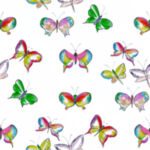
| Pattern: | Butterflies, Very Simple, Animals, Light |
| Features: | Wrinkled, Elastic, Soft |
| Application / Use: | Pants, Cloths, Skirts, Jeans, Shorts |
| Manufacturing Method: | Single-sided digital textile printing, all products are custom-made to order. |
| Care: |
     |
The fabric in question is the Bi-elastic Twill - Lisbon, composed of 97% polyester and 3% elastane with a weight of 209 gr/m2 and a width of 150 cm. It is printed with a single-sided patterned design using digital textile printing, which features colorful butterflies, with a very simple complexity and childlike animal motifs. The main colors are cotton white, lavender purple, and seaweed green. This fabric stands out for being rough, elastic, and soft to the touch. It could be perfectly combined with other plain colors such as emerald green, pastel pink, and sky blue.
Regarding the general characteristics of the fabric, this bi-elastic fabric allows for great ease of movement, being comfortable and resistant. In addition, being twill, it has a slight diagonal texture and resistance to deformation. On the other hand, the printed butterfly design brings a sense of freedom and joy to any garment or accessory made with this fabric.
In terms of applications and uses, it can be used in the modification of clothing such as pants, skirts, shorts, or even in the making of accessories such as cushions, embroidery hoops, or pictures, among others. In addition, it can be applied in home textiles such as kitchen towels, napkins, and cushions for the bedroom or living room.
To care for this fabric, it is recommended not to bleach, wash at a maximum temperature of 30ºC, iron at a cold temperature without using a dryer, and dry cleaning is allowed except for trichloroethylene.
Finally, the printing technology used in the Bi-elastic Twill - Lisbon is polyester sublimation, which allows for high-quality color reproduction, detail, and durability. This technique consists of transferring the ink from the sublimation paper to the fabric using heat and pressure to obtain a vivid and fixed result.