Close
Trends


Printed Fabrics View articles
Telas en Colores Lisos View articles
Telas para Imprimir View articles
Trends
Printed Fabrics View articles
Telas en Colores Lisos View articles
Telas para Imprimir View articles


Elige colores lisos a juego con tu estampado favorito. ¡Selecciona aquí alguno de los colores principales!
| Material: | 95% Polyester, 5% Elastane |
| Width (cm): | 152 |
| Grammage (g/m²): | 237 |
| Pattern: | Vector pattern, Geometric, Light |
| Features: | Soft, Opaque, Elastic |
| Application / Use: | Panties, Body, Bras / B ralettes, Tops, Knitwear |
| Manufacturing Method: | Single-sided digital textile printing, all products are custom-made to order. |
| Care: |
     |
The base fabric is Synthetic Knit with Spandex - Support, a knitted fabric composed of 95% polyester and 5% elastane, with a weight of 237 gr/m2 and a width of 152 cm. Its soft texture, visual opacity, and elasticity make it ideal for garments such as lingerie, tops, knitwear, and accessories.
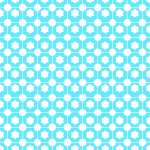
The printed design is a geometric vector pattern with a predominance of Day Blue (53.55%) combined with Cotton White (40.05%) and touches of Medium Blue (2.5%). It would perfectly combine with solid colors such as black, gray, or white for a more sophisticated look or with pastel tones for a sweeter and fresher style. The fabric is digitally printed on one side only.
The fabric has a soft texture and is elastic, making it comfortable and adaptable. The printed design is modern and versatile, ideal for current fashion. Furthermore, its sublimation printing technology makes the design durable, fade-resistant, and deformation-resistant.
Among the applications and uses for this fabric are lingerie, briefs, bodysuits, bras/bralettes, fashion garments for both women and men, accessories, sportswear, and other items such as scrunchies or hair ties. The fabric is timeless, making it a safe investment for any collection.
To care for this fabric, it is important to avoid bleaching, wash at a maximum temperature of 30ºC, dry clean except for trichloroethylene, iron at a cool temperature on the reverse side of the fabric, and do not tumble dry.
Finally, sublimation printing technology consists of transferring the design from paper to fabric using a heat press that applies heat, time, and pressure. The inks turn into gas and are absorbed by the fabric, creating a permanent and wear-resistant image. This technique allows detailed and vivid designs to be printed on a wide variety of fabrics.