Close
Click or press [Enter] to view the results
Trends


Printed Fabrics View articles
Telas en Colores Lisos View articles
Telas para Imprimir View articles
Trends
Printed Fabrics View articles
Telas en Colores Lisos View articles
Telas para Imprimir View articles


Elige colores lisos a juego con tu estampado favorito. ¡Selecciona aquí alguno de los colores principales!
| Material: | 100% Polyester |
| Width (cm): | 145 |
| Grammage (g/m²): | 70 |
| Pattern: | Standard, Artistic, Mosaic, Colorful, Gaudí |
| Features: | Water repellent, Thin, Smooth |
| Application / Use: | Jackets, Shower Curtains, Raincoats, Jackets, Cushions |
| Manufacturing Method: | Single-sided digital textile printing, all products are custom-made to order. |
| Care: |
     |
Storm fabric is a fine, water-repellent technical fabric with a composition of 100% polyester and a weight of 70 gr/m2. With a width of 145 cm, it is ideal for creating jackets, shower curtains, raincoats, and windbreakers. Its printing technology is sublimation (polyester), which ensures excellent quality of the printed image.
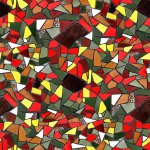
The printed design of the fabric is artistic and mosaic in style, with standard complexity and intense, vibrant colors. Its main shades are mocha brown, bear coffee brown, and bell pepper red. This fabric could perfectly combine with solid tones such as black, light grey, and white.
The printed fabric has a water-repellent finish that makes it waterproof, giving it a thin and smooth feel that makes it very comfortable to the touch. On the other hand, the printed design has a unique complexity and style, full of color and life.
Among the applications and uses of the fabric, we could highlight that it is perfect for both womens and mens fashion, as its technical characteristics make it ideal for creating waterproof garments. It is also useful for creating shower curtains and other home items. Additionally, thanks to its water-repellent capacity, the fabric is perfect for creating sportswear such as raincoats and windbreakers.
This fabric should be washed in warm water at no more than 40°C, avoiding the use of bleach and dry cleaning. It is recommended to iron it at a cool temperature and avoid using tumble dryers.
Finally, the printing technology used in the manufacturing of this fabric is sublimation (polyester), which allows the transfer of the image to the fabric through the application of heat and pressure. This process ensures that the image remains on the fabric for a long time, without losing quality or color.