Close
Click or press [Enter] to view the results
Trends


Printed Fabrics View articles
Telas en Colores Lisos View articles
Telas para Imprimir View articles
Trends
Printed Fabrics View articles
Telas en Colores Lisos View articles
Telas para Imprimir View articles


Elige colores lisos a juego con tu estampado favorito. ¡Selecciona aquí alguno de los colores principales!
| Material: | 85% Polyester, 12% Polyamide, 3% Elastane |
| Width (cm): | 150 |
| Grammage (g/m²): | 280 |
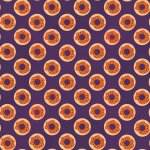
| Pattern: | Very Simple, Vector pattern, Doughnuts, Dark |
| Features: | Soft |
| Application / Use: | Chairs, Armchairs, Pants, Overshirts, Cushions |
| Manufacturing Method: | Single-sided digital textile printing, all products are custom-made to order. |
| Care: |
      |
| Notices: |
IMPORTANTE: plazo de recepción de tela base previsto para el 15 de Febrero, todos los pedidos previos de Enero y Febrero se expedirán a partir de esa fecha. |
The fabric in question is a velvety corduroy called Dublin, composed of 85% polyester, 12% polyamide, and 3% elastane. Its weight is 280 gr/m2 and its width is 150 cm. The printed design on the fabric is very simple and features a vector pattern of donuts in jam purple, fox orange, and light orange tones, which give it a bright and fun touch. The fabric, printed on one side by digital textile printing, can be combined with plain colors in dark and neutral tones, such as black, gray, or brown.
The soft texture and visual brightness of the printed design make this fabric ideal for making fashion garments, such as pants, jackets, blazers, and overshirts, as well as for manufacturing bags and backpacks. It is also an excellent option for upholstering chairs, armchairs, and sofas, as well as for creating cushions and decorative baskets in a bedroom or living room. Furthermore, being a velvety corduroy, it is a resistant and durable fabric.
It is important to note that the Dublin velvety corduroy fabric does not allow bleaching, dry cleaning, or tumble drying, but it does allow dry cleaning except with trichloroethylene. For ironing, a cold temperature is recommended.
The printing technology used on this fabric is sublimation, which consists of applying ink in a gaseous state to the fabric fiber, allowing for the printing of high-definition images in intense and durable tones. With this technique, the design is printed directly onto the fabric, penetrating it permanently, which ensures its resistance to washing and rubbing.