Close
Click or press [Enter] to view the results
Trends


Printed Fabrics View articles
Telas en Colores Lisos View articles
Telas para Imprimir View articles
Trends
Printed Fabrics View articles
Telas en Colores Lisos View articles
Telas para Imprimir View articles


Elige colores lisos a juego con tu estampado favorito. ¡Selecciona aquí alguno de los colores principales!
| Material: | 94% Polyester, 6% Elastane |
| Width (cm): | 150 |
| Grammage (g/m²): | 180 |
| Pattern: | Fish, Simple, Marino, Photography, Ocean |
| Features: | Elastic, Granules |
| Application / Use: | Dresses, Monkeys, T-shirts, Tops, Skirts |
| Manufacturing Method: | Single-sided digital textile printing, all products are custom-made to order. |
| Care: |
     |
| Notices: |
En colores lisos y/o estampados este tejido puede blanquear si se abre en exceso, es ampliamente adquirido por nuestros clientes en productos textiles que no exigen grandes elongaciones. Recomendamos adquirir una muestra para validar que es la textura y acabado que busca. |
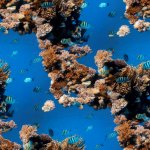
The Riga Stretch Knit Crepe fabric features a captivating design of Sea Fish in shades of Night Blue, Night Black, and Blood Brown, evoking the fascination and beauty of the ocean. This stretchy crepe fabric has a granular texture and a soft touch, making it ideal for creating fitted and comfortable garments. The design is simple and subtle, highlighting the natural beauty of marine fish and their habitat. The fabric could be combined with plain colors such as white, beige, or light blue to achieve a subtle yet effective contrast.
The Riga Stretch Knit Crepe is an elastic and soft fabric that adapts to the body, ideal for fitted garments such as dresses, tops, or jumpsuits. The high polyester composition of the fabric makes it resistant to fading and deformation, and the added elastane provides greater flexibility and comfort. The Sea Fish design is sophisticated and elegant, ideal for fresh and light fashion garments that convey a sense of vacation and relaxation. The fabric is printed on one side using digital textile printing, which ensures high print quality and long-lasting colors.
The Riga Stretch Knit Crepe is easy to care for and maintain, suitable for machine washing at a maximum temperature of 40ºC. It also allows dry cleaning, cool ironing, and tumble drying at a reduced temperature. It is important to avoid the use of bleaches or trichloroethylene to maintain the integrity of the colors and the quality of the fabric. The printing technology used to manufacture this fabric is polyester sublimation, which involves transferring the ink directly onto the textile fiber through heat and pressure, creating a durable and high-quality print.