Close
Click or press [Enter] to view the results
Trends


Printed Fabrics View articles
Telas en Colores Lisos View articles
Telas para Imprimir View articles
Trends
Printed Fabrics View articles
Telas en Colores Lisos View articles
Telas para Imprimir View articles


Elige colores lisos a juego con tu estampado favorito. ¡Selecciona aquí alguno de los colores principales!
| Material: | 75% Polyester, 25% Elastane |
| Width (cm): | 150 |
| Grammage (g/m²): | 230 |
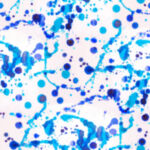
| Pattern: | Stains, Painting, Simple, Modern Art, Artistic |
| Features: | Elastic, Chlorine Resistant, Very High UV Protection 50+ |
| Application / Use: | Body, Bikinis, Swimsuit, Jersey, Tights / Leggings |
| Sustainability certificates: | GRS |
| Manufacturing Method: | Single-sided digital textile printing, all products are custom-made to order. |
| Care: |
     |
The Recycled Lycra - Seal of 230 gr/m2 is an elastic fabric, 150 cm wide, composed of 75% polyester and 25% elastane. Its printed design features a combination of abstract spots, artistic details, and simple strokes that reflect a modern and artistic style. The main colors are cotton white, neon blue, and iceberg blue, perfectly combinable with solid tones such as black, white, and navy blue. The fabric is printed with the design on one side using digital textile printing.
The Recycled Lycra - Seal of 230 gr/m2 has elastic characteristics, a soft texture, and a chlorine-resistant finish, in addition to possessing a very high UV Protection Factor of 50+. The printed design has high complexity despite having simple strokes and artistic details that give it a modern and sophisticated appearance. The main applications of this fabric include lingerie, sportswear, and swimwear, for women, men, and children.
To care for the Recycled Lycra - Seal of 230 gr/m2, it is important not to bleach it and to wash it at a maximum temperature of 40ºC, avoiding dry cleaning and tumble drying, ironing it at a low temperature. Delicate handling of the garment is necessary to maximize its durability and prevent damage to its fabric.
The printing technology used in the manufacturing of this fabric is sublimation (polyester), a process that involves printing on special paper using special inks and then, through heat and pressure, transferring the printed image to the fabric. This process ensures that the printed image does not fade over time and that there are no differences in color tonality between different parts of the fabric.