Close
Click or press [Enter] to view the results
Trends


Printed Fabrics View articles
Telas en Colores Lisos View articles
Telas para Imprimir View articles
Trends
Printed Fabrics View articles
Telas en Colores Lisos View articles
Telas para Imprimir View articles


Elige colores lisos a juego con tu estampado favorito. ¡Selecciona aquí alguno de los colores principales!
| Material: | 94% Polyester, 6% Elastane |
| Width (cm): | 150 |
| Grammage (g/m²): | 180 |
| Pattern: | Simple, Home Decoration, Botanist, Vector pattern, Leaves |
| Features: | Elastic, Granules |
| Application / Use: | Dresses, Monkeys, T-shirts, Tops, Skirts |
| Manufacturing Method: | Single-sided digital textile printing, all products are custom-made to order. |
| Care: |
     |
| Notices: |
En colores lisos y/o estampados este tejido puede blanquear si se abre en exceso, es ampliamente adquirido por nuestros clientes en productos textiles que no exigen grandes elongaciones. Recomendamos adquirir una muestra para validar que es la textura y acabado que busca. |
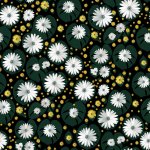
The fabric in question is the Elastic Knit Crepe - Riga, a fabric with a composition of 94% polyester and 6% elastane that gives it a very elastic feel and a grainy surface. The printed design is botanical and simply complex, featuring leaf and daisy motifs in multi-color tones. In addition to the main colors, it could be combined with solid tones such as green, yellow, or pink. It is important to note that the fabric is digitally printed on one side only.
In terms of general characteristics, the fabric is suitable for making various garments for both women and men, from dresses and skirts to t-shirts and cardigans. Likewise, its weight of 180 gr/m2 and its width of 150 cm make it a resistant and easy-to-work-with fabric. The printed design and its colors are perfect for fashion garments.
Regarding care, it is important to note that it should not be bleached and the maximum washing temperature is 40ºC. However, the fabric can be dry cleaned except for trichloroethylene. To iron it, a cold temperature is required, and it is recommended to tumble dry at a reduced temperature to prolong its lifespan.
Finally, it is important to highlight that the printing technology used in the manufacturing of this fabric is sublimation (polyester), a process in which the design is printed on special paper and transferred to the fabric using heat and pressure. This method allows for high-quality and durable designs.