Close
Click or press [Enter] to view the results
Trends


Printed Fabrics View articles
Telas en Colores Lisos View articles
Telas para Imprimir View articles
Trends
Printed Fabrics View articles
Telas en Colores Lisos View articles
Telas para Imprimir View articles


Elige colores lisos a juego con tu estampado favorito. ¡Selecciona aquí alguno de los colores principales!
| Material: | 82% Polyester, 18% Elastane |
| Width (cm): | 150 |
| Grammage (g/m²): | 270 |
| Pattern: | Simple, Home Decoration, Botanist, Vector pattern, Leaves |
| Features: | Elastic, Chlorine Resistant, Very High UV Protection 50+ |
| Application / Use: | Body, Swimsuit, Bikinis, Jersey, Tights / Leggings |
| Manufacturing Method: | Single-sided digital textile printing, all products are custom-made to order. |
| Care: |
     |
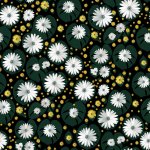
The Lycra Polyester fabric - Nairobi of 270 gr/m2 stands out for its softness, elasticity, and resistance. With a simple printed design, inspired by nature and with a mix of multi-colors, this fabric is ideal for making lingerie, swimwear, or sportswear. The floral and botanical design with leaves and daisies, printed on one side by digital textile printing, brings originality and freshness to any garment made with this fabric.
This Lycra Polyester - Nairobi of 270 gr/m2 is a fabric with a soft touch texture and a chlorine-resistant finish, which makes it ideal for use in swimwear that will have intensive use. Its very high UV protection 50+ makes it an ideal fabric for garments that will be used outdoors for long periods of time.
Among the applications and uses of this fabric, in addition to those already mentioned, we can highlight its use in cycling garments due to its high elasticity, adaptability, and performance. It is also an ideal fabric for making tights or leggings due to its great breathability and quick drying capacity, as well as in leotard garments for sports such as rhythmic gymnastics or artistic skating, thanks to its high elasticity.
It is important to take into account the specific care of this fabric, such as the maximum washing temperature of 40ºC or not tumble drying, to ensure its durability and optimal condition in the long term.
The printing technology used in this Lycra Polyester - Nairobi of 270 gr/m2 is sublimation, which allows the transfer of the design to the fabric precisely and without loss of quality, guaranteeing an optimal final result. This technology consists of the use of special inks which, through heat and pressure, are converted directly into gas and impregnate the fibers of the fabric, creating a durable and high-quality image.