Close
Click or press [Enter] to view the results
Trends


Printed Fabrics View articles
Telas en Colores Lisos View articles
Telas para Imprimir View articles
Trends
Printed Fabrics View articles
Telas en Colores Lisos View articles
Telas para Imprimir View articles


Elige colores lisos a juego con tu estampado favorito. ¡Selecciona aquí alguno de los colores principales!
| Material: | 85% Polyester, 15% Elastane |
| Width (cm): | 150 |
| Grammage (g/m²): | 190 |
| Pattern: | Painting, Colorful, Brilliant, Artistic, Drawn |
| Features: | Soft, Elastic, Chlorine Resistant, Very High UV Protection 50+ |
| Application / Use: | Scrunchie, Scrunchies, Bikinis, Swimsuit, Swimsuit |
| Sustainability certificates: | GRS |
| Manufacturing Method: | Single-sided digital textile printing, all products are custom-made to order. |
| Care: |
     |
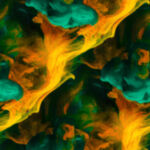
The Recycled Lycra - Recycled fabric is a soft and elastic material composed of 85% polyester and 15% elastane, making it ideal for use in both sportswear and swimwear. Its weight is 190 gr/m2 and its width is 150 cm, and it is certified as sustainable thanks to its recycled composition. As for the printed design, it is an artistic work with vivid and bright colors where dark forest green, milk chocolate brown, and dark orange predominate, creating a very striking smoke effect. This design would combine perfectly with other plain colors such as white, black, or yellow. The fabric is printed on one side using digital textile printing, which ensures the quality and detail of the print.
In terms of its characteristics, the fabric is soft to the touch and very elastic, making it very comfortable to wear. In addition, it has a chlorine-resistant finish and very high UV protection of 50+, which makes it ideal for swimwear and sportswear. On the other hand, the printed design stands out for its artistic and drawn style, which makes it a striking and original option for any garment.
Regarding the applications and uses of the fabric, apart from the already mentioned bikinis and sports swimsuits, this fabric lends itself perfectly to the making of scrunchies and hair ties, which are very fashionable today.
For the care of this fabric, it is important not to bleach it and to wash it at a maximum temperature of 40ºC without using dry cleaning or a tumble dryer. For ironing, it is recommended to use a cool temperature.
Finally, the fabric is manufactured with sublimation printing technology, which consists of digitally printing the image on paper and transferring it to the fabric through heat and pressure. In this way, a high-quality and high-definition print is obtained on the fabric.