Close
Click or press [Enter] to view the results
Trends


Printed Fabrics View articles
Telas en Colores Lisos View articles
Telas para Imprimir View articles
Trends
Printed Fabrics View articles
Telas en Colores Lisos View articles
Telas para Imprimir View articles


Elige colores lisos a juego con tu estampado favorito. ¡Selecciona aquí alguno de los colores principales!
| Material: | 75% Polyester, 25% Elastane |
| Width (cm): | 150 |
| Grammage (g/m²): | 230 |
| Pattern: | Standard, Tropical, Vector pattern, Botanist, Home Decoration |
| Features: | Elastic, Chlorine Resistant, Very High UV Protection 50+ |
| Application / Use: | Body, Bikinis, Swimsuit, Jersey, Tights / Leggings |
| Sustainability certificates: | GRS |
| Manufacturing Method: | Single-sided digital textile printing, all products are custom-made to order. |
| Care: |
     |
The base fabric is Recycled Lycra - Seal of 230 gr/m2, a Lycra-type fabric composed of 75% polyester and 25% elastane, with a weight of 230 gr/m2 and a width of 150 cm. This fabric has attributes such as its elastic texture and chlorine resistance, and is also protected with a UV protection factor (UPF) of 50+, making it ideal for swimwear, sportswear, and fashion in general.
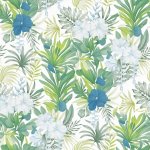
The printed design on this Recycled Lycra has a standard complexity and a tropical style, with a vectorial pattern and artistic botanical and floral elements. It incorporates a wide variety of main colors, such as green, blue, pink, yellow, and violet, making it extremely eye-catching. This printed fabric can be combined with other plain colors such as black, white, turquoise, or yellow, among others.
It is important to note that the fabric is printed with the stamped design on one side using digital textile printing, meaning it is not a double-sided printed fabric, but rather printed on one side. Both the fabric and the printed design have unique characteristics, with the fabric being elastic and chlorine-resistant, and the stamped design featuring artistic botanical and floral elements.
Among the most common applications and uses of the printed Recycled Lycra - Seal of 230 gr/m2 are swimwear, lingerie, leggings, leotards, and other sportswear and fashion garments that require elasticity and resistance. Furthermore, this fabric complies with GRS certification and, being recycled, is committed to sustainability.
Care for this fabric is simple, but some guidelines should be followed to extend its useful life, such as washing at maximum temperatures of 40ºC and ironing at a cool temperature, along with not bleaching, dry cleaning, or tumble drying.
Finally, the printing technology for this fabric is sublimation, which is applied with a flat heat press at a determined temperature and pressure, allowing the ink to pass directly from a solid to a gaseous state and penetrate the polyester fibers, thus achieving a perfect fixation of the design on the fabric.