Close
Click or press [Enter] to view the results
Trends


Printed Fabrics View articles
Telas en Colores Lisos View articles
Telas para Imprimir View articles
Trends
Printed Fabrics View articles
Telas en Colores Lisos View articles
Telas para Imprimir View articles


Elige colores lisos a juego con tu estampado favorito. ¡Selecciona aquí alguno de los colores principales!
| Material: | 82% Polyester, 18% Elastane |
| Width (cm): | 150 |
| Grammage (g/m²): | 270 |
| Pattern: | Standard, Tropical, Decorative, Vector pattern, Leaves |
| Features: | Elastic, Chlorine Resistant, Very High UV Protection 50+ |
| Application / Use: | Body, Swimsuit, Bikinis, Jersey, Tights / Leggings |
| Manufacturing Method: | Single-sided digital textile printing, all products are custom-made to order. |
| Care: |
     |
The base fabric is Polyester Lycra - Nairobi, with a composition of 82% polyester and 18% elastane, and a weight of 270 gr/m2. Its width is 150 cm and its care instructions include not bleaching, washing at a maximum temperature of 40ºC, dry cleaning except for trichloroethylene, ironing at a cool temperature, and not tumble drying. This type of fabric is used for making sportswear, swimwear, and lingerie, among others.
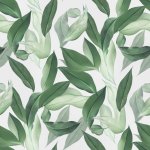
The printed design features a standard complexity with a tropical and decorative style, composed of vectorial patterns of leaves and plants in multicolor tones. This design can be combined with solid colors such as black, white, green, navy blue, and dark red to achieve a harmonious contrast.
The fabric is printed with the design on one side using digital textile printing, a technique that provides high quality, definition, and durability to the print. The fabric has an elastic texture and feel, is chlorine resistant, and features UPF - UV Protection Factor, offering Very High UV protection 50+.
Its applications include the manufacture of swimsuits, bikinis, leotards, and sports leggings for women, men, and children. It can also be used in the production of beachwear and lingerie.
The necessary care for this fabric includes not bleaching, ironing at a cool temperature, not tumble drying, and washing at no more than 40ºC. It allows dry cleaning except for trichloroethylene.
The printing technology used for the manufacture of this fabric is sublimation, which consists of printing the design on paper and transferring it to the fabric using heat and pressure, achieving high definition and color saturation.