Close
Click or press [Enter] to view the results
Trends


Printed Fabrics View articles
Telas en Colores Lisos View articles
Telas para Imprimir View articles
Trends
Printed Fabrics View articles
Telas en Colores Lisos View articles
Telas para Imprimir View articles


Elige colores lisos a juego con tu estampado favorito. ¡Selecciona aquí alguno de los colores principales!
| Material: | 82% Polyester, 18% Elastane |
| Width (cm): | 150 |
| Grammage (g/m²): | 270 |
| Pattern: | Simple, Blurry, Botanist, Home Decoration, Artistic |
| Features: | Elastic, Chlorine Resistant, Very High UV Protection 50+ |
| Application / Use: | Body, Swimsuit, Bikinis, Jersey, Tights / Leggings |
| Manufacturing Method: | Single-sided digital textile printing, all products are custom-made to order. |
| Care: |
     |
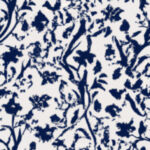
The Polyester Lycra fabric - Nairobi is a high-quality elastic fabric, composed of 82% polyester and 18% elastane, with a weight of 270 gr/m2 and a width of 150 cm. Its printed design is characterized by its simplicity, blurred, and botanical style, with a naturalistic base adorned with artistic and pictorial floral flowers in predominant tones of old white, deep blue, and whale blue. This design can be easily combined with plain colors in blue, white, and gray tones to create different effects in clothing.
The fabric is printed by single-sided digital textile printing, which means that the print is only on one surface of the material and can be easily manipulated to create different shapes and designs. The fabric is elastic, with a textured feel and chlorine resistant, as well as offering very high UV protection 50+, making it perfect for applications such as swimwear, tights, leggings, leotards and lingerie, as well as for sports in general.
Given its weight and composition, it is an ideal fabric for elastic and comfortable applications on the skin, but the necessary care must always be taken into account to keep it in perfect condition. It is important to avoid bleaching and washing in water at temperatures above 40ºC, as well as not tumble drying and ironing at low temperatures. Dry cleaning is recommended except with trichloroethylene.
The printing technology used to create the fabric design is called sublimation, which consists of infusing ink into the fabric through a high-pressure thermal process that makes it resistant to fading and wear. This allows complex elements such as complex and detailed prints to be printed, achieving a wide variety of designs and colors for clothing.