Close
Click or press [Enter] to view the results
Trends


Printed Fabrics View articles
Telas en Colores Lisos View articles
Telas para Imprimir View articles
Trends
Printed Fabrics View articles
Telas en Colores Lisos View articles
Telas para Imprimir View articles


Elige colores lisos a juego con tu estampado favorito. ¡Selecciona aquí alguno de los colores principales!
 Order sample
| Material: | 100% Polyester |
| Width (cm): | 150 |
| Grammage (g/m²): | 160 |
| Pattern: | Painting, Complex, Drawn, Botanist, Pictorial florals |
| Features: | Water repellent, Wrinkled, Antibacterial |
| Application / Use: | Racks, Pictures, Deckchairs, Pants, Wallet |
| Manufacturing Method: | Single-sided digital textile printing, all products are custom-made to order. |
| Care: |
     |
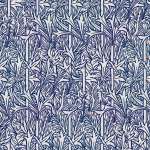
The fabric in question is the Water-Repellent Antibacterial Fabric - Tromso, a technical fabric composed of 100% polyester with a density of 160 gr/m2 and a width of 150 cm. Its printed design is characterized by complex botanical and floral patterns in gray and blue tones, with 42.26% platinum gray, 31.64% deep blue, and 9.69% whale blue. These tones can be combined with solid colors such as white, black, and light blue. The fabric is digitally printed on one side, meaning it is not a double-sided fabric but printed on a single side.
Regarding its general characteristics, this fabric stands out for its water-repellent and waterproof finish, making it ideal for outdoor use, as well as its rough texture and antibacterial finish. Furthermore, the attributes of the printed design reflect a pictorial and artistic nature through the intricately drawn flowers and botanical elements.
Among the applications and uses of this fabric are fashion and accessories, decoration in frames and canvases, outdoor items like sun loungers and cushions, and home textiles such as tablecloths, cushions, and other decorative elements like toiletry bags and coin purses.
It is important to note that this fabric can be washed at a maximum temperature of 60ºC and cannot be tumble dried. It is also recommended not to use bleach and to iron at a warm temperature.
Finally, the Water-Repellent Antibacterial Fabric - Tromso is manufactured using polyester sublimation technology, which involves printing the design on transfer paper with special inks and then pressing the paper against the fabric at high temperatures so that the ink transfers to the fabric, thus ensuring high quality and durability in the print.