Close
Click or press [Enter] to view the results
Trends


Printed Fabrics View articles
Telas en Colores Lisos View articles
Telas para Imprimir View articles
Trends
Printed Fabrics View articles
Telas en Colores Lisos View articles
Telas para Imprimir View articles


Elige colores lisos a juego con tu estampado favorito. ¡Selecciona aquí alguno de los colores principales!
| Material: | 93% Polyester, 5% Viscose, 2% Elastane |
| Width (cm): | 150 |
| Grammage (g/m²): | 380 |
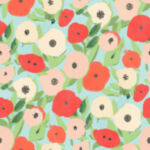
| Pattern: | Simple, Drawn, Botanist, Poppy, Pictorial florals |
| Features: | Soft |
| Application / Use: | Altar Cloths, Coats / Trench, Coaster, Jackets / Vests, Blazers |
| Manufacturing Method: | Single-sided digital textile printing, all products are custom-made to order. |
| Care: |
     |
The Paño - Glasgow fabric is a high-quality textile, composed of 93% polyester, 5% viscose, and 2% elastane, with a weight of 380 gr/m2 and a width of 150 cm. It is characterized by its soft texture and resistance to wear. The printed design features a simple complexity, with a drawn style and a botanical floral theme, highlighting the presence of poppies and artistic and pictorial flowers in multi-colors. This design would combine perfectly with solid colors such as red, black, and white, as they fit very well with the multi-color design. The fabric is printed on one side using digital textile printing.
The combination of the quality of the base fabric and high-resolution digital textile printing provides an elegant and sophisticated final result to the design. The Paño - Glasgow fabric is versatile, making it suitable for a wide variety of applications. According to its characteristics and attributes, it is suitable for both fashion garments such as coats, blazers, jackets, and bomber jackets, and for home use, for making woven coasters or altar textiles, for example. It is ideal for the autumn/winter 2021 season due to its high grammage.
The care instructions for this fabric are as follows: do not bleach, wash at a maximum temperature of 40°C, do not dry clean, iron at a warm temperature, and do not tumble dry.
The printing technology used for the manufacture of this fabric is sublimation (polyester). It consists of a digital printing technique that uses special inks that turn into gas when heated, penetrating the fabric fibers, creating a durable and high-quality result. It is an environmentally friendly process, as it does not produce waste or toxic substances.