Close
Click or press [Enter] to view the results
Trends


Printed Fabrics View articles
Telas en Colores Lisos View articles
Telas para Imprimir View articles
Trends
Printed Fabrics View articles
Telas en Colores Lisos View articles
Telas para Imprimir View articles


Elige colores lisos a juego con tu estampado favorito. ¡Selecciona aquí alguno de los colores principales!
| Material: | 100% Polyester |
| Width (cm): | 160 |
| Grammage (g/m²): | 135 |
| Pattern: | Standard, Botanist, Black and white, Artistic, Artistic Flowers |
| Features: | Smooth, Translucent, Mottled, Elastic |
| Application / Use: | Knitwear, T-shirts, Table Runners |
| Manufacturing Method: | Single-sided digital textile printing, all products are custom-made to order. |
| Care: |
     |
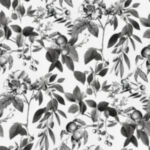
The fabric in question is a mottled polyester knit fabric, with a weight of 135 gr/m2 and a width of 160 cm. Its printed design features a standard complexity with a botanical, artistic black and white style, with artistic flowers and pictorial florals in the main colors cotton white, wolf grey, and sonic silver grey. This fabric combines perfectly with plain colors in white, black, grey, silver tones or with touches of green or mauve tones.
The fabric is printed with the stamped design on one side by digital textile printing. The general characteristics of the fabric present a smooth and translucent texture, with an elastic feel and a mottled aesthetic. In addition, the printed design presents a very artistic floral nature that stands out for the use of different shades in the main color palette.
The specific applications and uses of this fabric are for womens and mens fashion, in knit garments such as t-shirts. It is suitable for use in any season of the year.
Regarding fabric care, it is important not to bleach and not to tumble dry. In addition, it should be washed at a maximum temperature of 30ºC and dry cleaning is allowed except for trichloroethylene. For ironing, it is recommended to use a cool temperature.
The printing technology used for this fabric is sublimation, which allows printing a design with high quality detail that integrates perfectly into the fabric fibers, preventing possible wear or color loss due to use or washing. This printing technique is carried out using specialized ink that is printed on transfer paper, which is then pressed onto the fabric using a combination of controlled time, temperature, and pressure.