Close
Click or press [Enter] to view the results
Trends


Printed Fabrics View articles
Telas en Colores Lisos View articles
Telas para Imprimir View articles
Trends
Printed Fabrics View articles
Telas en Colores Lisos View articles
Telas para Imprimir View articles


Elige colores lisos a juego con tu estampado favorito. ¡Selecciona aquí alguno de los colores principales!
| Material: | 100% Polyester |
| Width (cm): | 150 |
| Grammage (g/m²): | 420 |
| Pattern: | Standard, Drawn, Botanist, Decorative, Vector pattern |
| Features: | Rigid |
| Application / Use: | Jackets, Blazers, Coats / Trench, Skirts, Dresses |
| Manufacturing Method: | Single-sided digital textile printing, all products are custom-made to order. |
| Care: |
     |
| Notices: |
Se trata de un tejido con relieve y al ser impreso presenta fuerza de color en las fibras más externas quedando en su color natural las fibras internas. Puede presentar pequeñas trazas, hilos o borra dada su naturaleza reciclada y cuya aparición, aunque se de en un % bajo de ocasiones, es totalmente arbitraria e inevitable. |
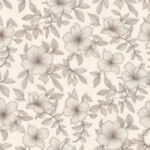
The Tweed - Chanel fabric is a type of Tweed with a composition of 100% POLYESTER, with a weight of 420 gr/m2 and a width of 150 cm. Its printed design is characterized by standard complexity, botanical and decorative style drawings, and stylized and artistic floral patterns in raw, almond, and pale silver-gray tones. The fabrics texture is stiff to the touch, resulting in a feeling of high quality and durability. The fabric is digitally printed with the design on one side, ensuring a high-quality print on a single side of the fabric.
In terms of its general characteristics, the Tweed - Chanel fabric is perfect for making fashion garments such as jackets, blazers, coats, skirts, dresses, bomber jackets, and shorts. It is also an excellent option for manufacturing cushions for the living room, bedroom, and kitchen, and can be used in interior and exterior decoration applications. In addition, the fabric is resistant to most external agents, making it suitable for outdoor sports.
Regarding care, the fabric should be washed at maximum temperatures of 30°C and not bleached. It is recommended not to iron at high temperatures and to avoid using tumble dryers. Dry cleaning is allowed, excluding trichloroethylene.
The printing technology used in the fabrics manufacturing is sublimation (polyester). This process is carried out by transferring ink through a vaporization process in which the ink changes from a solid to a gaseous state, thus avoiding loss of quality in the printed image.