Close
Click or press [Enter] to view the results
Trends


Printed Fabrics View articles
Telas en Colores Lisos View articles
Telas para Imprimir View articles
Trends
Printed Fabrics View articles
Telas en Colores Lisos View articles
Telas para Imprimir View articles


Elige colores lisos a juego con tu estampado favorito. ¡Selecciona aquí alguno de los colores principales!
| Material: | 97% Polyester, 3% Elastane |
| Width (cm): | 150 |
| Grammage (g/m²): | 209 |
| Pattern: | Standard, Botanist, Home Decoration, Artistic, Pictorial florals |
| Features: | Wrinkled, Elastic, Soft |
| Application / Use: | Pants, Cloths, Skirts, Jeans, Shorts |
| Manufacturing Method: | Single-sided digital textile printing, all products are custom-made to order. |
| Care: |
     |
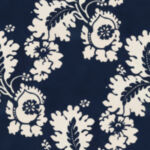
The Bi-elastic Twill Fabric - Lisbon is a twill composed of 97% polyester and 3% elastane, making it an elastic fabric with a soft texture to the touch and a weight of 209 gr/m2. The fabric has a standard complexity, and its printed design is botanical, artistic, and home decor style. The floral theme of the design is broad, highlighting pictorial flowers, artistic flowers, and stylized flowers. The main colors of the design are Night Black at 60.57%, Antique Ecru at 36.49%, and Iron Gray at 1.09%. The fabric can combine perfectly with other plain colors such as beige, gray, or even with stronger tones such as red and navy blue.
The fabric is printed with the design on one side using digital textile printing, which means it is not a double-sided printed fabric but printed on one side. Regarding the general characteristics of the fabric, we can highlight its roughness, elasticity, and softness to the touch, qualities that make it a perfect material for creating fitted and comfortable garments such as trousers, skirts, jeans, and Bermuda shorts. It also adapts perfectly as a base for accessories such as cushions or napkins.
Regarding fabric care, it is recommended not to bleach and to wash at a maximum temperature of 30ºC. Dry cleaning is possible, except with trichloroethylene, and iron at a cold temperature. However, it is not recommended to tumble dry the fabric.
The printing technology used for the manufacture of this fabric is sublimation, which consists of printing an image on transfer paper and then transferring it to the fabric using heat and pressure. This results in a more durable and wash-resistant finish than other printing methods.