Close
Click or press [Enter] to view the results
Trends


Printed Fabrics View articles
Telas en Colores Lisos View articles
Telas para Imprimir View articles
Trends
Printed Fabrics View articles
Telas en Colores Lisos View articles
Telas para Imprimir View articles


Elige colores lisos a juego con tu estampado favorito. ¡Selecciona aquí alguno de los colores principales!
| Material: | 100% Polyester |
| Width (cm): | 150 |
| Grammage (g/m²): | 420 |
| Pattern: | Stains, Pictorial, Complex, Modern Art, Artistic |
| Features: | Rigid |
| Application / Use: | Jackets, Blazers, Coats / Trench, Skirts, Dresses |
| Manufacturing Method: | Single-sided digital textile printing, all products are custom-made to order. |
| Care: |
     |
| Notices: |
Se trata de un tejido con relieve y al ser impreso presenta fuerza de color en las fibras más externas quedando en su color natural las fibras internas. Puede presentar pequeñas trazas, hilos o borra dada su naturaleza reciclada y cuya aparición, aunque se de en un % bajo de ocasiones, es totalmente arbitraria e inevitable. |
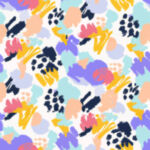
The Tweed - Chanel fabric stands out for its 100% polyester composition, high grammage of 420 gr/m2, and a width of 150 cm. The printed design on the fabric features an abstract and artistic style with complex stains and brushstrokes in predominant shades of black and white. This design could combine very well with plain fabrics in red, blue, or gray tones.
The main characteristic of the base fabric is its rigid texture, while the printed design presents artistic complexity. Among the applications and uses of the fabric are jackets, blazers, coats, skirts, dresses, bomber jackets, vests, home cushions, bow ties, caps, and sports vests.
It is important to consider the care of this fabric, avoiding bleaching and using maximum temperatures of 30°C for washing. In addition, it can be dry cleaned, but the use of trichloroethylene is not recommended, and it should be ironed at cool temperatures. It should be noted that this fabric is printed on one side only using digital textile printing.
The printing technology used in the weaving of this fabric is sublimation, which allows the printed design to penetrate the fabric fibers. This process is carried out using a special ink printer and special paper on which the design is printed. Then, the paper is placed on the fabric and subjected to high temperature and pressure, which causes the ink to transfer to the fabric.