Close
Click or press [Enter] to view the results
Trends


Printed Fabrics View articles
Telas en Colores Lisos View articles
Telas para Imprimir View articles
Trends
Printed Fabrics View articles
Telas en Colores Lisos View articles
Telas para Imprimir View articles


Elige colores lisos a juego con tu estampado favorito. ¡Selecciona aquí alguno de los colores principales!
| Material: | 94% Polyester, 6% Elastane |
| Width (cm): | 147 |
| Grammage (g/m²): | 80 |
| Pattern: | Watercolor, Painting, Standard, Watercolor, Artistic |
| Features: | Transparent, Thin, Elastic |
| Application / Use: | Skirts, Dresses, Dresses, Bras / B ralettes, Panties |
| Manufacturing Method: | Single-sided digital textile printing, all products are custom-made to order. |
| Care: |
     |
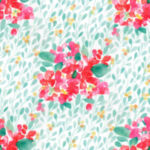
The Elastic Tulle fabric - Oslo is a sheer tulle with a thin, elastic texture. Its printed design features attributes such as watercolor, paint, colorfulness, and botanical elements like artistic flowers and leaves. The main colors of the design are predominantly 45.34% of an unspecified color and 26.3% of another unspecified color. In addition to these colors, the fabric could be combined with solid colors such as white, black, pale pink, or mint green, to highlight the tones present in the printed design.
It is important to note that this fabric is digitally printed with the design on one side only. This means the print is only on one face of the fabric, not on both sides.
Regarding general characteristics, the Elastic Tulle fabric - Oslo offers a soft and elastic texture, making it ideal for fitted and delicate garments. The printed design adds an artistic and colorful touch to any garment made with this fabric.
In terms of applications and uses for this fabric, it can be used in fashion for both men and women, in garments such as skirts, dresses, bras, panties, and bodysuits. It is also suitable for accessories like hosiery and for bridal and childrens dresses. Its use in lingerie and intimate apparel highlights its transparency and delicacy.
Regarding the care of this fabric, it should be noted that bleaching is not recommended, and its maximum washing temperature is 30ºC. Furthermore, it cannot be dry cleaned, ironed, or tumble dried. It is important to follow these recommendations to preserve the quality and appearance of the fabric.
Finally, the printing technology used to manufacture this fabric is sublimation (polyester). This printing technique allows the colors and details of the design to adhere durably to the fabric, ensuring its resistance to washing and prolonged use.