Close
Click or press [Enter] to view the results
Trends


Printed Fabrics View articles
Telas en Colores Lisos View articles
Telas para Imprimir View articles
Trends
Printed Fabrics View articles
Telas en Colores Lisos View articles
Telas para Imprimir View articles


Elige colores lisos a juego con tu estampado favorito. ¡Selecciona aquí alguno de los colores principales!
| Material: | 100% Polyester |
| Width (cm): | 150 |
| Grammage (g/m²): | 82 |
| Pattern: | Standard, Flowery, Modern Art, Artistic, Botanist |
| Features: | Thin, Soft, Translucent, Granules |
| Application / Use: | Dresses, Dresses, Skirts, Blouses, Brides |
| Sustainability certificates: | GRS |
| Manufacturing Method: | Single-sided digital textile printing, all products are custom-made to order. |
| Care: |
     |
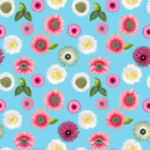
The Recycled Crepe Chine - Eros fabric is a polyester crepe with a weight of 82 gr/m2 and a width of 150 cm. It has a thin, soft, and granular texture, with a translucent visual appearance. Its printed design features standard complexity, with a floral and artistic style. The main colors are Denim Blue (50.96%), Daisy Pink (17.86%), and Off-White (13.43%). This design can be combined with solid colors such as white, gray, or black.
This fabric is printed with the design on one side using digital textile printing. The printing is done only on one side of the fabric, not on both sides.
The Recycled Crepe Chine - Eros fabric has various characteristics, such as its soft and thin feel. Its translucent texture gives it an elegant and light appearance. The printed design adds a touch of floral and artistic style, with abstract and large flowers. Plants and leaves can also be seen in the design.
Regarding its applications and uses, this type of fabric is mainly used in fashion, such as dresses, skirts, blouses, shirts, and scarves. It is also used in lingerie, especially in wedding dresses. Recycled polyester crepe offers a sustainable option for making garments.
As for fabric care, it is recommended not to bleach it and to wash it at a maximum temperature of 30ºC. It is suitable for dry cleaning, except with trichloroethylene. It should be ironed at low temperature and cannot be tumble dried.
The printing technology used to manufacture this fabric is polyester sublimation. This technique allows colors to be vibrant and durable, as the ink is absorbed directly into the fabric fibers. In addition, digital textile printing allows for greater precision and detail in the printed design.