Close
Click or press [Enter] to view the results
Trends


Printed Fabrics View articles
Telas en Colores Lisos View articles
Telas para Imprimir View articles
Trends
Printed Fabrics View articles
Telas en Colores Lisos View articles
Telas para Imprimir View articles


Elige colores lisos a juego con tu estampado favorito. ¡Selecciona aquí alguno de los colores principales!
| Material: | 82% Polyester, 18% Elastane |
| Width (cm): | 150 |
| Grammage (g/m²): | 270 |
| Pattern: | Pictorial, Standard, Abstract, Modern Art, Artistic |
| Features: | Elastic, Chlorine Resistant, Very High UV Protection 50+ |
| Application / Use: | Body, Swimsuit, Bikinis, Jersey, Tights / Leggings |
| Manufacturing Method: | Single-sided digital textile printing, all products are custom-made to order. |
| Care: |
     |
The fabric used is Polyester Lycra, specifically the Nairobi model, weighing 270 gr/m2. This Lycra fabric is composed of 82% polyester and 18% elastane, which gives it an elastic texture and a soft touch. With a weight of 270 gr/m2 and a width of 150 cm, this fabric is ideal for lingerie, sportswear such as swimsuits, bikinis, tights, and leggings.
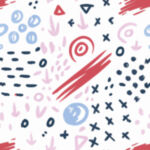
The printed design of this fabric features attributes such as pictorial art, standard complexity, an abstract and artistic style, and abstract shapes, including crosses, arrows, lines, and circles. The main colors of the design are cotton white, pig pink, and cherry red. These colors create a striking and vibrant combination that can be complemented with solid colors like black, navy blue, or mint green.
It is important to note that this fabric is printed with the design on one side using digital textile printing. This means that the design is only present on one side of the fabric, and the reverse is a solid color.
Regarding general characteristics, the Lycra Nairobi fabric is elastic and chlorine-resistant, making it ideal for swimwear. Additionally, it has a high UV protection factor of 50+, offering excellent protection against harmful UV rays.
In terms of applications and uses, in addition to the lingerie and sportswear mentioned above, this fabric is also suitable for making leotards and bodysuits. Its elasticity and resistance make it suitable for tight-fitting garments with high movement.
Care instructions for this fabric include not bleaching, washing at a maximum temperature of 40ºC, not using trichloroethylene for dry cleaning, ironing at a low temperature, and not tumble drying. These instructions ensure that the fabric retains its elasticity and vibrant colors throughout its lifespan.
Finally, the printing technology used to manufacture this fabric is sublimation. This technique allows the design to be permanently transferred onto the fabric, creating intense and long-lasting colors. The printing is done using heat and pressure, which guarantees the resistance and quality of the print.