Close
Click or press [Enter] to view the results
Trends


Printed Fabrics View articles
Telas en Colores Lisos View articles
Telas para Imprimir View articles
Trends
Printed Fabrics View articles
Telas en Colores Lisos View articles
Telas para Imprimir View articles


Elige colores lisos a juego con tu estampado favorito. ¡Selecciona aquí alguno de los colores principales!
| Material: | 100% Polyester |
| Width (cm): | 150 |
| Grammage (g/m²): | 200 |
| Pattern: | Pictorial, Standard, Modern Art, Artistic, Bicolor |
| Features: | Waterproof, Granules, Wrinkled, Opaque |
| Application / Use: | Trench coat, Raincoats, Raincoats, Cushions, Awning |
| Manufacturing Method: | Single-sided digital textile printing, all products are custom-made to order. |
| Care: |
    |
The waterproof fabric - Outdoor is a technical polyester fabric with a weight of 200 gr/m2 and a width of 150 cm. Its waterproof finish makes it perfect for use in fashion garments, such as trench coats and raincoats, for men, women, and children. It can also be used in outdoor decoration, such as in making cushions and awnings, as well as tablecloths for the dining room.
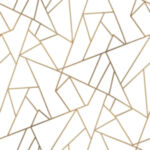
The printed design of this fabric is characterized by being pictorial, with an abstract and artistic style. It presents geometric shapes, which gives it a modern and decorative touch. The main colors are 88.61% and 6.02%. These dominant colors can be combined with other plain colors, such as white, black, navy blue, green, or yellow, to create contrasts or harmonies in the garments or decorative elements made with this fabric.
It is important to note that this fabric is printed on one side only by digital textile printing, which means that the design is only on one side of the fabric.
Regarding general characteristics, the waterproof fabric - Outdoor has a granulated and rough feel, which gives it an opaque visual texture. In addition, it has a waterproof finish that makes it water resistant.
As for its applications and uses, in addition to those mentioned above, this type of fabric is ideal for making sportswear, such as raincoats, since its impermeability protects from rain. It can also be used in outdoor decoration, such as in the manufacture of awnings, which offer protection against the elements.
Regarding the care that this fabric should have, it is recommended not to bleach it, not to dry clean it, iron it at a cold temperature, and not to use a dryer. These guidelines will ensure the durability and resistance of the fabric.
Finally, the printing technology used in this fabric is sublimation. This process consists of transferring the design onto the surface of the fabric by means of heat and pressure, which results in a durable and wash-resistant print. It is a technique widely used in the textile industry due to its high quality and image definition.