Close
Click or press [Enter] to view the results
Trends


Printed Fabrics View articles
Telas en Colores Lisos View articles
Telas para Imprimir View articles
Trends
Printed Fabrics View articles
Telas en Colores Lisos View articles
Telas para Imprimir View articles


Elige colores lisos a juego con tu estampado favorito. ¡Selecciona aquí alguno de los colores principales!
| Material: | 94% Polyester, 6% Elastane |
| Width (cm): | 150 |
| Grammage (g/m²): | 180 |
| Pattern: | Stains, Pictorial, Standard, Abstract, Artistic |
| Features: | Elastic, Granules |
| Application / Use: | Dresses, Monkeys, T-shirts, Tops, Skirts |
| Manufacturing Method: | Single-sided digital textile printing, all products are custom-made to order. |
| Care: |
     |
| Notices: |
En colores lisos y/o estampados este tejido puede blanquear si se abre en exceso, es ampliamente adquirido por nuestros clientes en productos textiles que no exigen grandes elongaciones. Recomendamos adquirir una muestra para validar que es la textura y acabado que busca. |
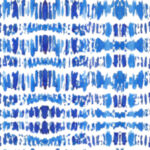
The Crepe de Punto Elástico - Riga fabric is a type of crepe with a composition of 94% polyester and 6% elastane, which gives it great elasticity and a soft feel. With a weight of 180 gr/m2 and a width of 150 cm, it is ideal for making fashion garments for both women and men. Its print features attributes such as abstract stains and artistic elements, which gives it a standard complexity. Its design is two-tone and colorful, with a predominance of 50.94% of the main color and 20.54% of the second color. It can also be combined with other plain colors to create contrasts and highlight the design.
This fabric is printed with the stamped design on one side using digital textile printing. It is important to note that the design is only on one side of the fabric, it is not printed on both sides.
Regarding the general characteristics, the fabric presents an elastic and granulated texture, which makes it comfortable to wear and visually interesting. The stamped design, for its part, is abstract and artistic, with abstract shapes that add dynamism.
The applications and uses of this fabric are diverse. It can be used for making dresses, jumpsuits, t-shirts, tops, skirts, pants, cardigans and knitwear in general. Its versatility makes it an attractive option for various seasons.
Regarding care, it is recommended not to bleach the fabric and to wash it at a maximum temperature of 40ºC. It can also be dry cleaned, except with trichloroethylene. For ironing, a cold temperature should be used and it can be tumble dried at a reduced temperature.
Finally, the printing technology used in this fabric is sublimation, which is based on the transfer of inks through heat and pressure. This technique allows for high print quality and design durability.