Close
Click or press [Enter] to view the results
Trends


Printed Fabrics View articles
Telas en Colores Lisos View articles
Telas para Imprimir View articles
Trends
Printed Fabrics View articles
Telas en Colores Lisos View articles
Telas para Imprimir View articles


Elige colores lisos a juego con tu estampado favorito. ¡Selecciona aquí alguno de los colores principales!
| Material: | 94% Polyester, 6% Elastane |
| Width (cm): | 147 |
| Grammage (g/m²): | 80 |
| Pattern: | Pictorial, Simple, Artistic, Modern Art, Bicolor |
| Features: | Transparent, Thin, Elastic |
| Application / Use: | Skirts, Dresses, Dresses, Bras / B ralettes, Panties |
| Manufacturing Method: | Single-sided digital textile printing, all products are custom-made to order. |
| Care: |
     |
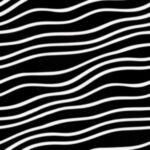
The Elastic Tulle Fabric - Oslo is a thin, transparent, and elastic fabric, perfect for fashion garments such as skirts, dresses, lingerie, bras, briefs, bodysuits, and accessories. It is also ideal for childrens and bridal wear, as well as for the manufacture of stockings. The printed design on this fabric features artistic and abstract characteristics, with wavy shapes that give it a modern and two-tone style, predominantly black and white colors. To combine with this design, solid colors such as red, pink, or dark blue can be used.
It is important to note that this fabric is printed with the stamped design on one side only by digital textile printing, which means that only one side of the fabric has the print. Regarding general characteristics, elastic tulle fabric is light, soft to the touch, and has a composition of 94% polyester and 6% elastane, which gives it elasticity and ease of movement when worn.
Regarding the applications and uses of this fabric, in addition to those mentioned above, it is commonly used in the confection of dance garments or theatrical performances, due to its transparency and lightness. It can also be used for decorating events or spaces, such as curtains or tablecloths.
Regarding the care of this fabric, it is recommended not to bleach it and to wash it at a maximum temperature of 30ºC. It is not recommended to dry clean or iron it, and it should not be tumble dried.
The printing technology used to manufacture this fabric is sublimation, which consists of transferring an image previously printed on paper through heat and pressure onto the fabric, achieving vibrant and long-lasting colors. This technique allows for greater precision and detail in the printed design, providing high-quality results.