Close
Trends


Printed Fabrics View articles
Telas en Colores Lisos View articles
Telas para Imprimir View articles
Trends
Printed Fabrics View articles
Telas en Colores Lisos View articles
Telas para Imprimir View articles


Elige colores lisos a juego con tu estampado favorito. ¡Selecciona aquí alguno de los colores principales!
| Material: | 75% Polyester, 25% Elastane |
| Width (cm): | 150 |
| Grammage (g/m²): | 230 |
| Pattern: | Standard, Mosaic, Colorful, Artistic, Decorative |
| Features: | Elastic, Chlorine Resistant, Very High UV Protection 50+ |
| Application / Use: | Body, Bikinis, Swimsuit, Jersey, Tights / Leggings |
| Sustainability certificates: | GRS |
| Manufacturing Method: | Single-sided digital textile printing, all products are custom-made to order. |
| Care: |
     |
The Recycled Lycra Fabric - Seal, 230 gr/m2, is a lycra fabric with a composition of 75% polyester and 25% elastane. With a weight of 230 gr/m2 and a width of 150 cm, this fabric features an elastic texture and a chlorine-resistant finish. Additionally, it boasts GRS certification, making it sustainable and environmentally friendly.
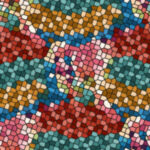
The printed design of this fabric is characterized by its multicolored main hues. This design is printed on one side using sublimation technology (polyester). This printing technique ensures that the colors are vibrant and long-lasting on the fabric.
In terms of its general characteristics, this fabric is elastic, soft to the touch, and has a very high UV protection factor (UPF) of 50+, making it ideal for lingerie, swimwear such as bikinis and swimsuits, leotards, leggings, among other garments.
The multicolored printed design offers many options for pairing with solid colors. Some combinations that could work well are solid colors in neutral tones such as white, black, or grey, as well as more vibrant colors that complement the designs hues.
It is important to consider some specific care instructions for this fabric. It is recommended to wash it at a maximum temperature of 40ºC and not to use bleach or dry cleaning. It should also be ironed at a cool temperature and tumble drying should be avoided.
Finally, the printing technology used on this fabric is sublimation. This process involves digitally printing the design onto special paper and then transferring it to the fabric using heat and pressure. This ensures that the design is sharp and durable on the fabric, without affecting its elastic properties or its softness to the touch.