Close
Click or press [Enter] to view the results
Trends


Printed Fabrics View articles
Telas en Colores Lisos View articles
Telas para Imprimir View articles
Trends
Printed Fabrics View articles
Telas en Colores Lisos View articles
Telas para Imprimir View articles


Elige colores lisos a juego con tu estampado favorito. ¡Selecciona aquí alguno de los colores principales!
| Material: | 100% Polyester |
| Width (cm): | 150 |
| Grammage (g/m²): | 82 |
| Pattern: | Standard, Gaudí, Abstract, Mosaic, Decorative |
| Features: | Thin, Soft, Translucent, Granules |
| Application / Use: | Dresses, Dresses, Skirts, Blouses, Brides |
| Sustainability certificates: | GRS |
| Manufacturing Method: | Single-sided digital textile printing, all products are custom-made to order. |
| Care: |
     |
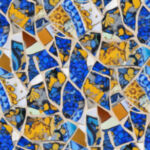
The available fabric is Recycled Crepe Chine - Eros, a polyester crepe with a weight of 82 gr/m2 and a width of 150 cm. The fabric is characterized by a thin, soft, translucent, and grainy texture to the touch, which gives it an elegant and delicate appearance. The printed design on the fabric is inspired by the Gaudí style, featuring a multicolor combination of vibrant and striking hues.
This design symbolizes the creativity and originality of Gaudís architectural works, reflecting his unique and modernist style. The main colors used in the design are multicolor, allowing the fabric to be combined with a wide range of solid colors such as white, black, blue, yellow, or pink.
It is important to note that the fabric is printed with the design on one side only, using digital textile printing. This means that the design is on a single side of the fabric, which gives it a sharper and more defined look.
Regarding the general characteristics of the fabric, we can highlight its lightness and fluidity, which makes it ideal for fashion garments such as dresses, skirts, blouses, and shirts. It is also suitable for making accessories like scarves.
As for fabric care, it is recommended to wash it at a maximum temperature of 30ºC, avoid using bleach, and iron it at a cool temperature. Dry cleaning is possible, except with trichloroethylene, and it should not be tumble dried.
The printing technology used in the manufacturing of this fabric is sublimation, which is applied to polyester to achieve a high-quality and durable image. This technique allows the design to be permanently integrated into the fibers of the fabric, preventing it from fading over time or with washes.