Close
Click or press [Enter] to view the results
Trends


Printed Fabrics View articles
Telas en Colores Lisos View articles
Telas para Imprimir View articles
Trends
Printed Fabrics View articles
Telas en Colores Lisos View articles
Telas para Imprimir View articles


Elige colores lisos a juego con tu estampado favorito. ¡Selecciona aquí alguno de los colores principales!
| Material: | 82% Polyester, 18% Elastane |
| Width (cm): | 150 |
| Grammage (g/m²): | 270 |
| Pattern: | Brushstrokes, Flowers, Wildflowers, Light, Painting |
| Features: | Elastic, Chlorine Resistant, Very High UV Protection 50+ |
| Application / Use: | Body, Swimsuit, Bikinis, Jersey, Tights / Leggings |
| Manufacturing Method: | Single-sided digital textile printing, all products are custom-made to order. |
| Care: |
     |
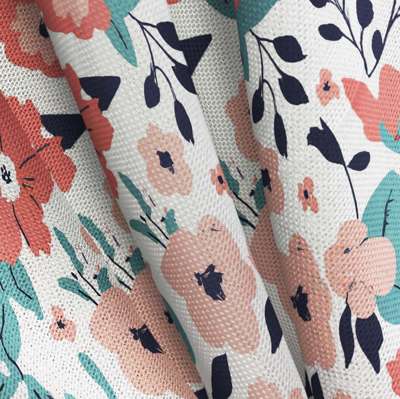
The Polyester Lycra Fabric - Nairobi is a stretchy and resistant fabric, with a printed design that combines abstract brushstrokes and wildflowers in cotton white, cadillac pink, and pale pink tones. This design symbolizes the freedom and beauty of nature, with a texture that evokes the softness of paint.
This fabric is printed with the single-sided design using digital textile printing, which means the print is sharp and durable. It combines perfectly with solid colors such as white, pale pink, and black, which will enhance the main colors of the design.
The general characteristics of this fabric include its elastic texture, its chlorine resistance, and its very high UV protection. The printed design adds a touch of unique and creative style, perfect for lingerie, sportswear, and swimsuits.
Among the applications and uses of this fabric are the creation of bikinis, swimsuits, leggings, leotards, and bodysuits, being perfect for sports fashion and swimwear. Its weight of 270 gr/m2 makes it ideal for fitted garments that require elasticity and resistance.
For the care of this fabric, it is important to wash it at a maximum temperature of 40ºC, avoid bleaching, iron at a cool temperature, and do not tumble dry. It can be dry cleaned except with trichloroethylene, which guarantees its durability and preservation of the print.
The printing technology used in this fabric is sublimation, which consists of transferring ink to the fabric through heat and pressure, guaranteeing a high-quality and resistant print. This technique allows the design to adhere permanently to the fabric, without losing intensity or definition over time.