Close
Click or press [Enter] to view the results
Trends


Printed Fabrics View articles
Telas en Colores Lisos View articles
Telas para Imprimir View articles
Trends
Printed Fabrics View articles
Telas en Colores Lisos View articles
Telas para Imprimir View articles


| Material: | 85% Polyester, 15% Elastane |
| Width (cm): | 150 |
| Grammage (g/m²): | 190 |
| Pattern: | Moles, Dark |
| Features: | Soft, Elastic, Chlorine Resistant, Very High UV Protection 50+ |
| Application / Use: | Scrunchie, Scrunchies, Bikinis, Swimsuit, Swimsuit |
| Sustainability certificates: | GRS |
| Manufacturing Method: | Single-sided digital textile printing, all products are custom-made to order. |
| Care: |
     |
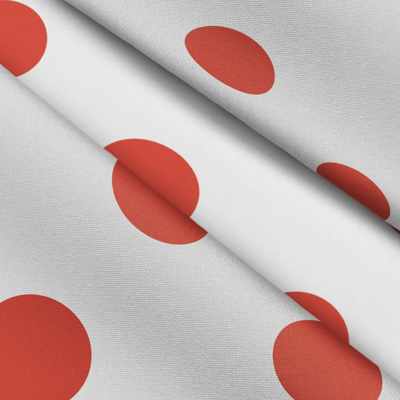
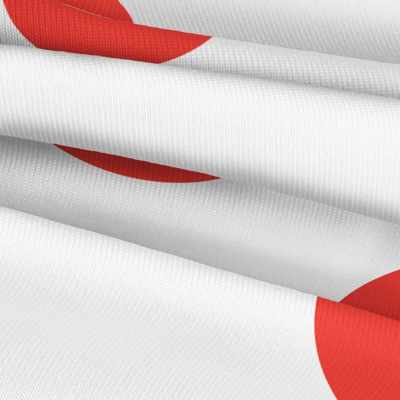
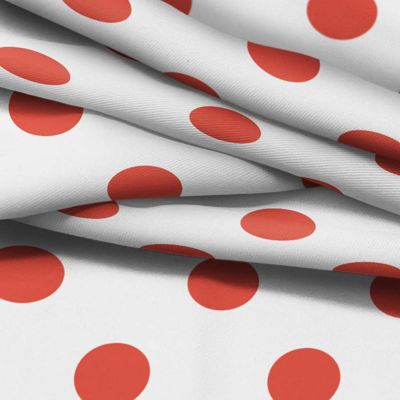
Recycled Lycra fabric is a high-quality fabric with a composition of 85% polyester and 15% elastane, with a weight of 190 gr/m2 and a width of 150 cm. Its printed design stands out with circles and polka dots in different shades of white, grapefruit red, and rose gold, giving it a fresh and youthful appearance.
The design printed on the fabric is made using the sublimation technique (polyester), which allows the print to be permanently fixed on the fabric surface, resulting in great definition and sharpness. It is worth noting that the fabric is only printed on one side.
The fabric has several characteristics that make it unique and versatile. It is soft and elastic to the touch, which makes it very comfortable for use in sportswear, swimwear, and fashion in general. In addition, its chlorine-resistant finish and UV protection of 50+ make it ideal for making swimsuits.
Among the applications and uses of this fabric, in addition to those already mentioned, are the making of panties, tights, leggings, tops, dresses, among many others. In terms of plain colors that can be combined with its printed design, white, black, and red stand out.
For its care, it is important to avoid bleaching and wash at a maximum temperature of 40°C, always avoiding dry cleaning and tumble drying, and ironing at a low temperature is recommended.
Regarding printing technology, sublimation (polyester) is a process in which the design is transferred directly and integrally onto the fabric through the application of heat and pressure. This system allows the print to be totally fixed to the fabric, without altering its softness or elasticity.