Close
Click or press [Enter] to view the results
Trends


Printed Fabrics View articles
Telas en Colores Lisos View articles
Telas para Imprimir View articles
Trends
Printed Fabrics View articles
Telas en Colores Lisos View articles
Telas para Imprimir View articles


| Material: | 75% Polyester, 25% Elastane |
| Width (cm): | 150 |
| Grammage (g/m²): | 230 |
| Pattern: | Moles, Dark |
| Features: | Elastic, Chlorine Resistant, Very High UV Protection 50+ |
| Application / Use: | Body, Bikinis, Swimsuit, Jersey, Tights / Leggings |
| Sustainability certificates: | GRS |
| Manufacturing Method: | Single-sided digital textile printing, all products are custom-made to order. |
| Care: |
     |
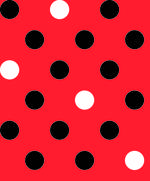
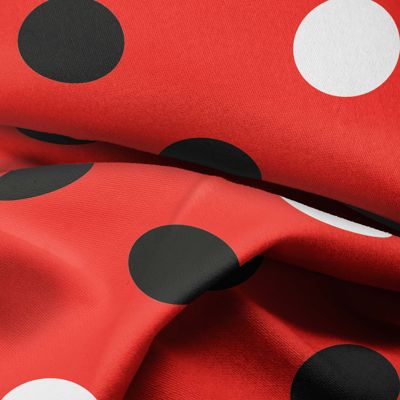
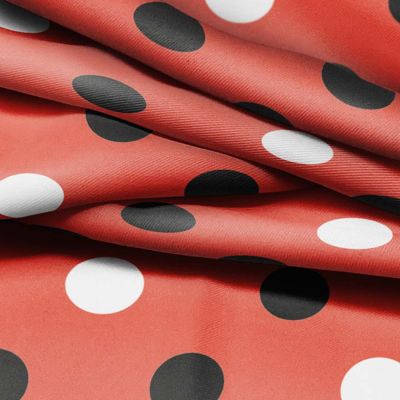
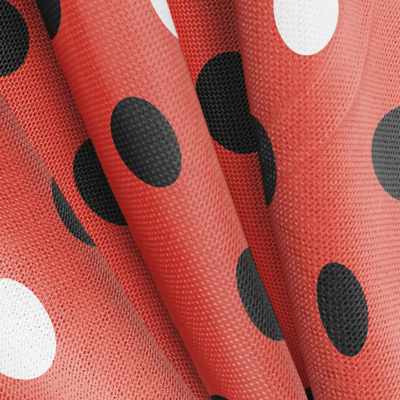
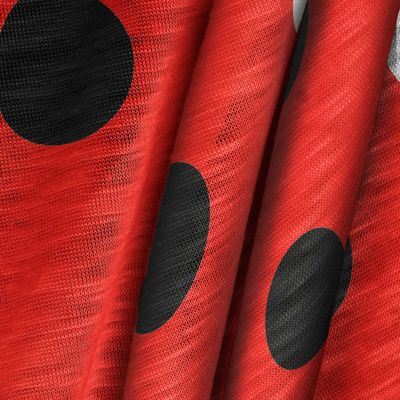
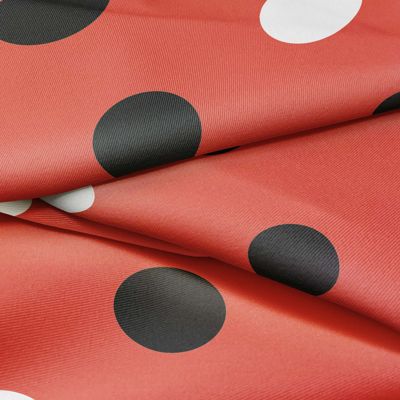
The Recycled Lycra Fabric - Seal stands out for its printed design of circles and polka dots in grapefruit red, night black, and cotton white tones. This design is versatile and modern in its use of geometric shapes and a balanced combination of colors. Additionally, this design can be combined with other plain fabrics in white, black, and red hues. Its important to note that the fabric is printed with this design on one side only using digital textile printing.
Regarding its characteristics, the Recycled Lycra Fabric - Seal is elastic, chlorine-resistant, and features a Very High UV Protection 50+. Its texture and feel make it ideal for sportswear, swimwear, and lingerie. Furthermore, being a recycled fabric with GRS certification, it is a sustainable and eco-friendly option.
As for its applications and uses, the Recycled Lycra - Seal is suitable for making garments such as swimsuits, bikinis, sports leggings, bodysuits, and leotards. Its versatility even allows for its use in swimwear fashion and underwear.
It is important to consider the specific care instructions for this fabric, which does not allow bleach or dry cleaning. Machine washing at no more than 40ºC is recommended, with cool ironing and air drying, avoiding the use of tumble dryers.
The printing technology used for the Recycled Lycra Fabric - Seal is polyester sublimation, a process where the ink turns into gas and penetrates the fabric fibers, achieving high-quality and durable printing. This process also allows for greater freedom in designs and colors, as well as a reduction in environmental impact by avoiding the use of chemical dyes.