Close
Click or press [Enter] to view the results
Trends


Printed Fabrics View articles
Telas en Colores Lisos View articles
Telas para Imprimir View articles
Trends
Printed Fabrics View articles
Telas en Colores Lisos View articles
Telas para Imprimir View articles


| Material: | 97% Polyester, 3% Elastane |
| Width (cm): | 150 |
| Grammage (g/m²): | 209 |
| Pattern: | Specks, Moles, Moles, Light |
| Features: | Wrinkled, Elastic, Soft |
| Application / Use: | Pants, Cloths, Skirts, Jeans, Shorts |
| Manufacturing Method: | Single-sided digital textile printing, all products are custom-made to order. |
| Care: |
     |
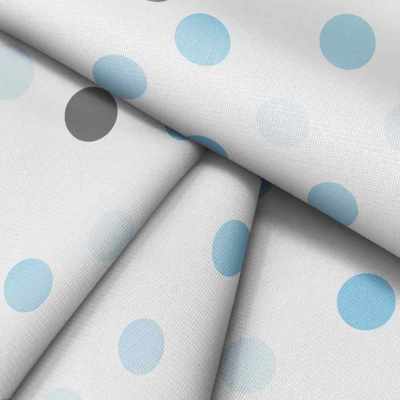
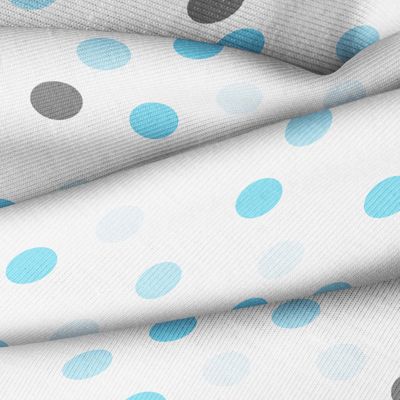
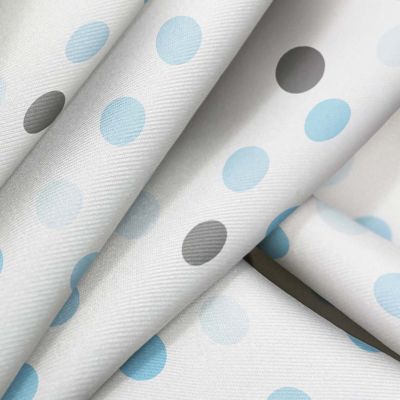
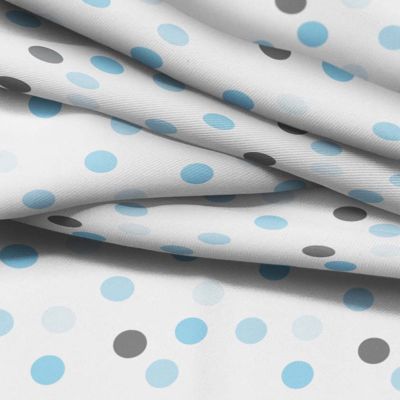
The base fabric is the Bielastic Twill - Lisbon, composed of 97% polyester and 3% elastane, with a weight of 209 gr/m2 and a width of 150 cm. Its printed design features circles, specks, dots, and polka dots in cotton white, light aqua blue, and dark aqua blue. This design simulates a depth and movement effect, creating an attractive and modern visual impact. The fabric, printed with this one-sided design using digital textile printing, can be perfectly combined with solid tones, especially white and blue.
The Bielastic Twill - Lisbon has a rough and elastic texture to the touch, resulting in a soft and pleasant fabric to wear. This characteristic makes it ideal for fitted garments or those requiring a certain margin of elasticity. The printed design blends very well with the fabrics texture, offering a high-quality and detailed image. Its applications and uses are broad, ranging from womens or mens fashion (trousers, skirts, jeans, shorts, dresses, accessories) to home textiles (kitchen towels, cushions, napkins, embroidery hoops, paintings).
The Bielastic Twill - Lisbon requires specific care to maintain its quality and preserve the colors of the printed design. It is recommended not to bleach, wash at a maximum temperature of 30°C, do not tumble dry, and iron at a cool temperature. Although dry cleaning is allowed, the use of trichloroethylene is discouraged as it is a toxic substance for the environment.
The printing technology used in the manufacturing of this fabric is sublimation (polyester), a process where the design is printed on a special transfer paper which is then transferred to the fabric using heat and pressure. The result is a high-definition, sharp, and durable image that does not deteriorate with washing or wear and tear from use.