Close
Click or press [Enter] to view the results
Trends


Printed Fabrics View articles
Telas en Colores Lisos View articles
Telas para Imprimir View articles
Trends
Printed Fabrics View articles
Telas en Colores Lisos View articles
Telas para Imprimir View articles


| Material: | 100% Organic cotton |
| Width (cm): | 150 |
| Grammage (g/m²): | 195 |
| Features: | Soft, Rigid |
| Application / Use: | Racks, Pictures, Pants, Overshirts, Jeans |
| Sustainability certificates: | GOTS |
| Manufacturing Method: | Single-sided digital textile printing, all products are custom-made to order. |
| Care: |
     |
The base fabric, Florence Organic Cotton Twill, has a composition of 100% organic cotton and a weight of 195 gr/m2. The plain printed color is Purple, Indigo, and Iris Purple with a cyan ink content of 82%, magenta of 100%, yellow of 11%, and black of 3%, resulting in a vibrant and deep color. This shade conveys a sense of mysticism, mystery, and sophistication. Its combination with lighter tones, such as white or beige, creates a contrasting effect that highlights the richness of the purple color.
The fabric is digitally printed with the plain color on one side, ensuring excellent image quality. Among the general characteristics of the base fabric are its soft yet rigid feel, making it ideal for fashion and decoration. In addition, its width of 160 cm and GOTS (Global Organic Textile Standard) certification make it a sustainable option.
Regarding applications and uses, in addition to those indicated, this type of fabric is excellent for making jackets, dresses, and skirts. It is also highly sought after for creating decorative elements such as cushions, curtains, and upholstery. In general, it adapts to multiple creative proposals and projects.
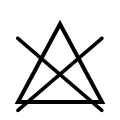
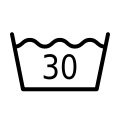
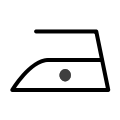
As for care, it is recommended not to bleach and not to tumble dry. In addition, ironing should be done at a cool temperature and it can be dry cleaned, except with trichloroethylene.
Finally, the printing technology used to manufacture this fabric is direct reactive digital printing for natural fibers. This method uses special inks to achieve high precision in image and color reproduction. In addition, it is an environmentally friendly technique as it reduces water and electricity consumption compared to traditional printing techniques.