Close
Click or press [Enter] to view the results
Trends


Printed Fabrics View articles
Telas en Colores Lisos View articles
Telas para Imprimir View articles
Trends
Printed Fabrics View articles
Telas en Colores Lisos View articles
Telas para Imprimir View articles


| Material: | 100% Organic cotton |
| Width (cm): | 150 |
| Grammage (g/m²): | 195 |
| Features: | Soft, Rigid |
| Application / Use: | Racks, Pictures, Pants, Overshirts, Jeans |
| Sustainability certificates: | GOTS |
| Manufacturing Method: | Single-sided digital textile printing, all products are custom-made to order. |
| Care: |
     |
The base fabric for this textile is Organic Cotton Twill - Florence, with a composition of 100% organic cotton, a weight of 195gr/m2, and a width of 160 cm. The printed color is a combination of green and blue-green, represented by a CMYK of 35 10 26 0. Symbolically, these colors evoke nature and balance. Technically, it is a shade of green with blue undertones that make it versatile for use in different environments and combined with other colors such as yellows, ochres, whites, and neutrals. It is important to note that this fabric is printed with the solid color on one side using digital textile printing.
The general characteristics of the base fabric are its softness and rigidity to the touch. Likewise, its organic composition and weight make this fabric a sustainable and high-quality option in the textile industry. Regarding its printed color, the intensity of the tones and the sharpness of the lines and details stand out.
Regarding its applications and uses, according to available data, this fabric can be used in decoration, fashion, and textile/home. It is ideal for creating cushions, paintings, frames, and other fashion accessories such as trousers, overshirts, jeans, shorts, and bags. Furthermore, thanks to its features, it is a good option for printing textiles for the kitchen and dining room, such as tablecloths, napkins, and table runners.
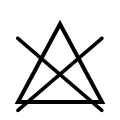
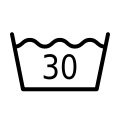
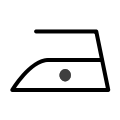
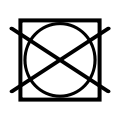
Regarding care, to maintain its performance and color, it is recommended not to bleach it, wash it at a maximum temperature of 30ºC, avoid using a tumble dryer, and iron at a cool temperature. This fabric allows dry cleaning except for trichloroethylene.
Finally, the printing technology used to manufacture this fabric is reactive direct digital printing for natural fibers. This means that special inks are used that react homogeneously with the fabrics, allowing for high image and color quality. Furthermore, as it is not a dyed fabric but printed on one side, a soft and pleasant texture is achieved.