Close
Click or press [Enter] to view the results
Trends


Printed Fabrics View articles
Telas en Colores Lisos View articles
Telas para Imprimir View articles
Trends
Printed Fabrics View articles
Telas en Colores Lisos View articles
Telas para Imprimir View articles


| Material: | 96% Polyester, 4% Elastane |
| Width (cm): | 150 |
| Grammage (g/m²): | 220 |
| Features: | Soft, Thin |
| Application / Use: | Shirts, Skirts, Blouses, Dresses, Handkerchiefs |
| Manufacturing Method: | Single-sided digital textile printing, all products are custom-made to order. |
| Care: |
     |
| Notices: |
Existen diferentes tipos de Sarga disponibles sen nuestra web, este tejido es una Sarga fina de bajo gramaje. Recomendamos adquirir una muestra para validar que es la textura que busca. |
The Sarga-Prada base fabric has a composition of 96% polyester and 4% elastane, with a weight of 220 gr/m2 and a width of 150 cm. The solid color printed on the fabric is in a raw and bleached almond tone, with a cyan ink content of 5, magenta of 12, yellow of 24, and black of 0, with a CMYK value of 5 12 24 0. This secondary color represents the balance between the serenity of beige and the warmth of white. It combines well with other shades of beige, light brown, and brighter shades like ochre.
It is important to note that this fabric is printed on one side using digital textile printing, which guarantees a high-quality result. Regarding the general characteristics of the base fabric, its texture is soft and somewhat thin, ideal for making womens and mens fashion garments such as skirts, blouses, or shirts.
As for the specific applications and uses of the fabric, in addition to those mentioned in the provided list (womens/mens fashion, shirts, skirts, blouses, dresses, and accessories such as scarves), it is commonly found in the manufacture of clothing for formal and office events. For example, it is used for making suit jackets for men and women.
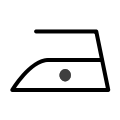
It is important to consider the necessary care for this fabric, which includes not bleaching it, washing it at a maximum temperature of 30ºC, not tumble drying, and ironing it at a cool temperature. In addition, it can be dry cleaned, excluding trichloroethylene.
Finally, the printing technology used for this fabric is sublimation (polyester). This process involves the use of ink and heat so that the ink pigments are fixed on the fabric, thus creating a sharp and durable image. Sublimation is especially effective in producing photographic images or designs with subtle color gradations.