Close
Click or press [Enter] to view the results
Trends


Printed Fabrics View articles
Telas en Colores Lisos View articles
Telas para Imprimir View articles
Trends
Printed Fabrics View articles
Telas en Colores Lisos View articles
Telas para Imprimir View articles


| Material: | 100% Polyester |
| Width (cm): | 147 |
| Grammage (g/m²): | 110 |
| Features: | Thin, Rigid, Soft |
| Application / Use: | Handbags, Bermuda, Wallets, Swimsuit, Swimsuit |
| Sustainability certificates: | GRS |
| Manufacturing Method: | Single-sided digital textile printing, all products are custom-made to order. |
| Care: |
     |
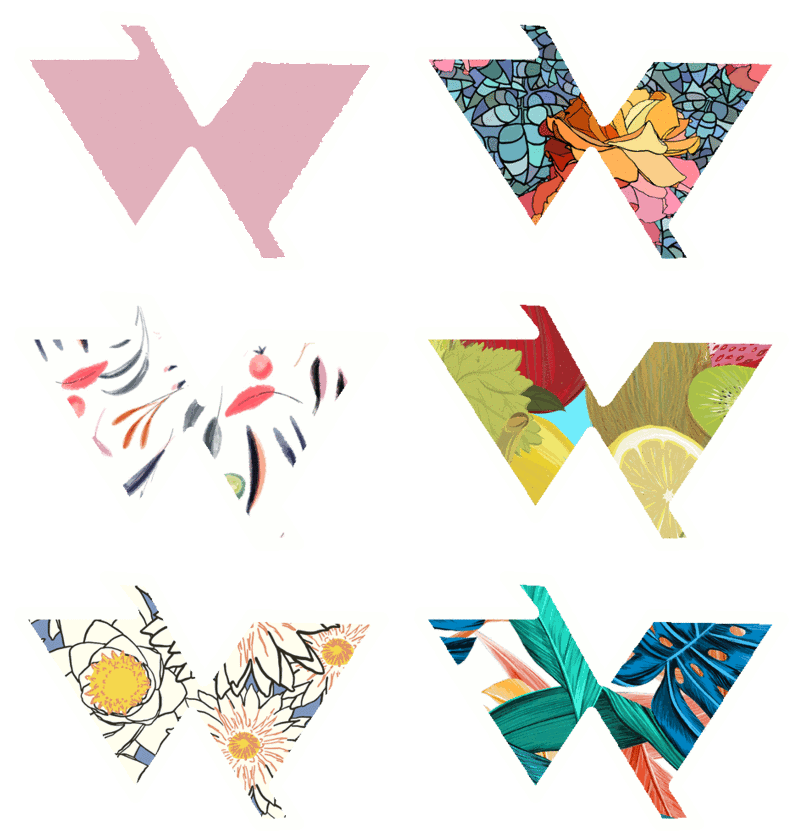
The base fabric of this textile is Recycled Microfiber - Biarritz, composed of 100% polyester with a weight of 110 gr/m2. Its width is 147 cm and it is GRS certified, indicating that it is a sustainable fabric made from recycled materials. The solid printed color is a thistle purple tone, with a combination of Cyan 14, Magenta 21, Yellow 7, and Black 0 inks, which translates to a CMYK value of 14 21 7 0.
This thistle purple tone is a soft shade that can evoke romanticism and mysticism. It is a secondary color achieved by mixing blue and red tones. Combined with other pastel tones, such as pale pink or light sky blue, it can provide a sweet and balanced feel. On the other hand, alongside darker tones like bottle green or navy blue, it can convey seriousness and elegance.
It is important to note that this fabric is printed on one side only using digital textile printing, which means that its solid color is only on one side, while the other remains white.
Regarding the characteristics of this base fabric, it has a thin but rigid texture to the touch, resulting in a soft surface when in contact with the skin. Furthermore, it offers great versatility in terms of its applications, as it can be used for fashion and accessories, such as wallets, Bermuda shorts, and swimsuits, as well as for sportswear, swimwear, and accessories in general.
For its care, it is recommended not to use bleach during washing and that the maximum temperature does not exceed 30ºC. Additionally, it can be dry cleaned, but avoiding the use of trichloroethylene. It should not be tumble dried, and ironing should be done at a low temperature.
Finally, the printing technology used to manufacture this fabric is sublimation, which involves directly printing the desired image onto transfer paper and then transferring it to the fabric through the application of heat and pressure. This allows for the creation of complex and detailed designs, as well as long-lasting resistance to wear and washing.