Close
Click or press [Enter] to view the results
Trends


Printed Fabrics View articles
Telas en Colores Lisos View articles
Telas para Imprimir View articles
Trends
Printed Fabrics View articles
Telas en Colores Lisos View articles
Telas para Imprimir View articles


Elige colores lisos a juego con tu estampado favorito. ¡Selecciona aquí alguno de los colores principales!
| Material: | 97% Polyester, 3% Elastane |
| Width (cm): | 150 |
| Grammage (g/m²): | 209 |
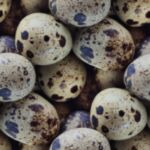
| Pattern: | Quail, Photography, Round, Dark, Quail eggs |
| Features: | Wrinkled, Elastic, Soft |
| Application / Use: | Pants, Cloths, Skirts, Jeans, Shorts |
| Manufacturing Method: | Single-sided digital textile printing, all products are custom-made to order. |
| Care: |
     |
The Bi-elastic Twill fabric - Lisbon features an animal print design, specifically quails, and round shapes, such as quail eggs. The multicolored design gives a fun and youthful touch to the fabric, ideal for making summer garments and accessories. In addition, it could be combined with plain fabrics in pastel or neutral colors to create subtle contrasts.
This fabric is digitally printed with the design on one side only, providing a detailed and sharp finish. On one side, the fabric has a rough and elastic texture, but its softness to the touch is undeniable.
Regarding its general characteristics, the fabric is perfect for making elastic and fitted garments, thanks to its bi-elastic composition of 97% polyester and 3% elastane. Its resistance and durability are also suitable for use in decorative products, such as cushions, paintings, or frames.
In terms of applications and uses, the fabric is ideal for making pants, skirts, jeans, shorts, dresses, and fashion accessories for both women and men. In addition, it could also be used to create kitchen towels, napkins, or cushions for the home.
To maintain the quality and extend the lifespan of the fabric, strict care instructions must be followed. It is important not to bleach it and to wash it at a maximum temperature of 30ºC. Dry cleaning is permitted, except with trichloroethylene. Ironing should be done at a cool temperature, and tumble drying is not recommended.
The printing technology used on this fabric is sublimation with polyester, which allows for durable color fixation. This method involves first printing the image on paper and then transferring it to the fabric using heat and pressure, which guarantees high quality and precision in the design details.