Close
Trends


Printed Fabrics View articles
Telas en Colores Lisos View articles
Telas para Imprimir View articles
Trends
Printed Fabrics View articles
Telas en Colores Lisos View articles
Telas para Imprimir View articles


Elige colores lisos a juego con tu estampado favorito. ¡Selecciona aquí alguno de los colores principales!
| Material: | 90% Polyester, 10% Elastane |
| Width (cm): | 150 |
| Grammage (g/m²): | 220 |
| Pattern: | Simple, Ancient, Forest, Dark, Camouflage |
| Features: | Elastic, Soft, Chlorine Resistant, Very High UV Protection 50+ |
| Application / Use: | Body, Bras / B ralettes, Knitwear, Tops, Scrunchies |
| Manufacturing Method: | Single-sided digital textile printing, all products are custom-made to order. |
| Care: |
     |
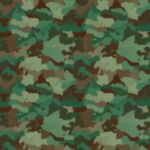
The base fabric is a Polyester Lycra - Cairo of 220 gr/m2 with a composition of 90% polyester and 10% elastane. The printed design presents a simple COMPLEXITY with an ANTIQUE style inspired by the NATURE of a FOREST. The design includes camouflage and military elements that merge with a more natural and organic style. The main colors are multicolor, which allows it to be combined with plain fabrics in shades of green, brown, and beige.
Both the fabric and the printed design have specific characteristics that make them unique. The Lycra is elastic with a soft texture to the touch and features a chlorine-resistant finish and a very high UV protection factor of 50+. The printed design presents a balanced and versatile aesthetic that adapts to different applications and uses.
The printed fabric is ideal for sports and lingerie applications, including bras and bralettes. It also works for knitwear and tops, as well as for scrunchies and for the manufacture of bikinis and swimsuits. Its versatility even extends to fashion applications, for both men and women.
Regarding fabric care, it is important to note that it should not be bleached, and the maximum washing temperature should be 40°C. The fabric allows dry cleaning, except for trichloroethylene, and should be ironed at a cool temperature. It is also important to mention that the fabric does not allow tumble drying.
The printing technology used for the manufacture of this fabric is sublimation, a technique that allows for high-quality reproduction of the design on the fabric. The fabric is printed on one side using high-precision digital textile printing.