Close
Click or press [Enter] to view the results
Trends


Printed Fabrics View articles
Telas en Colores Lisos View articles
Telas para Imprimir View articles
Trends
Printed Fabrics View articles
Telas en Colores Lisos View articles
Telas para Imprimir View articles


Elige colores lisos a juego con tu estampado favorito. ¡Selecciona aquí alguno de los colores principales!
| Material: | 85% Polyester, 15% Elastane |
| Width (cm): | 150 |
| Grammage (g/m²): | 190 |
| Pattern: | Marino, Waves, Dark |
| Features: | Soft, Elastic, Chlorine Resistant, Very High UV Protection 50+ |
| Application / Use: | Scrunchie, Scrunchies, Bikinis, Swimsuit, Swimsuit |
| Sustainability certificates: | GRS |
| Manufacturing Method: | Single-sided digital textile printing, all products are custom-made to order. |
| Care: |
     |
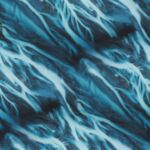
The Recycled Lycra fabric is a stretchy and soft textile composed of 85% polyester and 15% elastane, with a weight of 190 gr/m2 and a width of 150 cm. This fabric is GRS certified and sustainable, as it is made from recycled materials. The printed design combines a marine style with wave shapes, featuring main multicolor hues that bring joy and freshness to the fabric. This design could be paired with solid colors like white, blue, and green. Its important to note that the fabric is printed with the stamped design on one side using digital textile printing.
Regarding the general characteristics of the fabric, its softness and elasticity stand out, making it an ideal textile for sportswear or swimwear. Furthermore, it features a chlorine-resistant finish and very high UV protection 50+. On the other hand, the printed design adds a touch of originality and style to any garment made with this fabric.
Among the applications and uses of the fabric, the manufacturing of scrunchies and hair ties stands out, as well as sportswear and swimwear like bikinis and swimsuits. With its combination of elasticity and sun protection, it can also be used for making casual and summer clothing.
It is important to consider the care instructions for this fabric, as it should not be bleached, temperatures above 40ºC should be avoided, and it is not suitable for dry cleaning or tumble drying, in addition to requiring cold ironing. Failure to follow these guidelines could damage the fabric and cause it to lose some of its characteristics.
Finally, the printing technology used to manufacture this fabric is sublimation. This digital textile printing technique allows the design to be printed clearly and durably on the fabric, maintaining its quality and resistance even after multiple washes and uses.