Close
Click or press [Enter] to view the results
Trends


Printed Fabrics View articles
Telas en Colores Lisos View articles
Telas para Imprimir View articles
Trends
Printed Fabrics View articles
Telas en Colores Lisos View articles
Telas para Imprimir View articles


Elige colores lisos a juego con tu estampado favorito. ¡Selecciona aquí alguno de los colores principales!
| Material: | 100% Polyester |
| Width (cm): | 160 |
| Grammage (g/m²): | 220 |
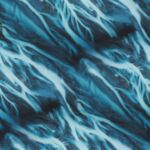
| Pattern: | Marino, Waves, Dark |
| Features: | Drawn out |
| Application / Use: | Hoodies, Toiletry bags, Hoodies, Backpacks, Tracksuit |
| Sustainability certificates: | GRS |
| Manufacturing Method: | Single-sided digital textile printing, all products are custom-made to order. |
| Care: |
     |
The Brushed Sweatshirt Fabric - Boston combines softness and strength thanks to its 100% polyester composition and a weight of 220 gr/m2. Its 160 cm width allows greater flexibility in making sportswear and fashion garments. The marine-style printed design, with multicolored waves, stands out against the fabrics base, achieving an attractive and modern visual effect. The plain colors that complement this design can be navy blue, white, and red. This fabric is printed with the patterned design on one side using digital textile printing.
The fabric has a brushed finish, which makes it more comfortable against the skin and easy to care for. The print gives it a fresh and casual personality, which can be used in different applications such as sweatshirts, backpack accessories, tracksuits, and toiletry bags, for men, women, and children alike. Another option for this type of fabric would be to use it for making winter blankets and cushions, thanks to its pleasant feel and warmth.
Regarding care, it is important not to bleach the fabric and to wash it at a maximum temperature of 40°C. It can be dry cleaned, except with trichloroethylene, and does not allow ironing as it is heat-sensitive. It is recommended to tumble dry at a reduced temperature to maintain its softness and preserve the printed design.
The printing technology used to manufacture this fabric is sublimation, which allows colors to be transferred to the fabric at a molecular level, ensuring a high-quality and durable result. The ink sublimates through heat, melts with the fabric, and turns into gas, thus penetrating the polyester fibers. This process achieves a more effective and environmentally friendly integration between the design and the fabric.