Close
Click or press [Enter] to view the results
Trends


Printed Fabrics View articles
Telas en Colores Lisos View articles
Telas para Imprimir View articles
Trends
Printed Fabrics View articles
Telas en Colores Lisos View articles
Telas para Imprimir View articles


Elige colores lisos a juego con tu estampado favorito. ¡Selecciona aquí alguno de los colores principales!
| Material: | 93% Polyester, 5% Viscose, 2% Elastane |
| Width (cm): | 150 |
| Grammage (g/m²): | 380 |
| Pattern: | Complex, Dark, Corrosion, Oxide, Metal |
| Features: | Soft |
| Application / Use: | Altar Cloths, Coats / Trench, Coaster, Jackets / Vests, Blazers |
| Manufacturing Method: | Single-sided digital textile printing, all products are custom-made to order. |
| Care: |
     |
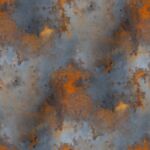
The Paño Glasgow fabric has a composition of 93% Polyester, 5% Viscose, and 2% Elastane, with a weight of 380 gr/m2 and a width of 150 cm. Its printed design presents a visual complexity with motifs of corrosion, rust, and multi-colored metal. Additionally, the fabrics texture is soft to the touch. This fabric is single-sided printed with digital textile printing.
Regarding its characteristics, Paño Glasgow is a resistant fabric, making it suitable for warm garments and accessories. Its printed design draws attention with its weathered and worn look, adding a dose of personal and urban style to the outfit. The predominant colors of the design are multi-color, allowing it to be combined with a wide range of plain colors, from neutral tones to vibrant hues.
The Paño Glasgow fabric with its complex and sophisticated printed design can be used in various fashion and decoration projects. It is recommended for outerwear such as jackets, coats, and trench coats, and for making decorative accessories like coasters. Moreover, it is associated with the winter and autumn/winter 2021 season.
For the care of this fabric, it is important to follow the manufacturers recommendations. Bleach should be avoided, and washing should be done at a maximum of 40ºC. Additionally, it cannot be tumble dried; instead, it should be air-dried. For ironing the fabric, the temperature should be set to warm.
The printing technology used for the manufacturing of this fabric is sublimation, which involves transferring ink to the fabric through a thermal process that avoids direct contact between the fabric and the ink. This allows for greater fidelity in design reproduction, high durability, and the ability to work with complex and varied color palettes.