Close
Click or press [Enter] to view the results
Trends


Printed Fabrics View articles
Telas en Colores Lisos View articles
Telas para Imprimir View articles
Trends
Printed Fabrics View articles
Telas en Colores Lisos View articles
Telas para Imprimir View articles


Elige colores lisos a juego con tu estampado favorito. ¡Selecciona aquí alguno de los colores principales!
| Material: | 100% Polyester |
| Width (cm): | 150 |
| Grammage (g/m²): | 200 |
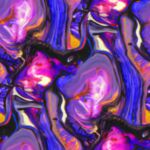
| Pattern: | Brushstrokes, Painting, Standard, Artistic, Drawn |
| Features: | Waterproof, Granules, Wrinkled, Opaque |
| Application / Use: | Trench coat, Raincoats, Raincoats, Cushions, Awning |
| Manufacturing Method: | Single-sided digital textile printing, all products are custom-made to order. |
| Care: |
    |
The base fabric is the Waterproof - Outdoor Fabric, a technical fabric made of 100% polyester with a weight of 200 gr/m2 and a width of 150 cm. It is waterproof, has a grainy and rough texture, and an opaque appearance. Its printed design features abstract brushstrokes and standard complexity, with an artistic and drawn style in multifaceted colors. It could be perfectly combined with solid colors such as white, black, red, and yellow. The fabric is printed with a one-sided design using digital textile printing.
Regarding its general characteristics, the fabric is suitable for use in sportswear and trench coats, as well as in outdoor decoration such as cushions and awnings, and in the home for making tablecloths for the dining room. As for the printed design, it is an ideal option for those looking for a striking and original garment or fabric with an artistic touch.
In relation to applications and uses, this waterproof fabric is suitable for any garment that requires water resistance such as raincoats, rain suits, and others, as well as in outdoor decoration. For making tablecloths, its resistance must be taken into account, which allows it to be easily cleaned without affecting the quality of the fabric.
Fabric care is simple: it should not be bleached, cannot be dry cleaned, can be ironed at a cool temperature, and cannot be tumble dried. Proper fabric maintenance will help keep it in good condition for longer.
Regarding the printing technology used to manufacture this printed fabric, it is polyester sublimation. This process consists of printing the design on special paper and then transferring it to the fabric with heat and pressure, which guarantees color quality and durability in the print. In addition, digital textile printing ensures that the design has a higher resolution than other forms of printing, and leaves no residue or odor on the fabric.