Close
Click or press [Enter] to view the results
Trends


Printed Fabrics View articles
Telas en Colores Lisos View articles
Telas para Imprimir View articles
Trends
Printed Fabrics View articles
Telas en Colores Lisos View articles
Telas para Imprimir View articles


Elige colores lisos a juego con tu estampado favorito. ¡Selecciona aquí alguno de los colores principales!
| Material: | 100% Polyester |
| Width (cm): | 147 |
| Grammage (g/m²): | 110 |
| Pattern: | Octopus, Simple, Marino, Dark |
| Features: | Thin, Rigid, Soft |
| Application / Use: | Handbags, Bermuda, Wallets, Swimsuit, Swimsuit |
| Sustainability certificates: | GRS |
| Manufacturing Method: | Single-sided digital textile printing, all products are custom-made to order. |
| Care: |
     |
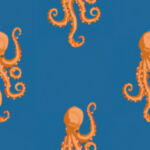
The Biarritz recycled microfiber fabric stands out for its softness and thinness, providing a pleasant and comfortable feel. The printed design, with a marine style and simple complexity, features marine animals such as octopuses on a predominant sky blue background, with details in basketball orange and cantaloupe orange. In addition, it can be combined with solid colors in shades of gray or green to create a balanced and harmonious effect. It is worth noting that this fabric is printed with the stamped design on one side only using digital textile printing.
Regarding its general characteristics, the Biarritz recycled microfiber is resistant and versatile, suitable not only for fashion and accessories, but also for sportswear and swimwear. The printed design stands out for its quality and sharpness, maintaining its original colors and details after several washes.
The applications and uses of this fabric are varied, from making swimsuits, bermudas, and bags, to creating wallets and fashion garments. Its GRS certification and recycled sustainability make it a responsible and environmentally friendly option.
For its care, it is recommended not to bleach, wash at maximum temperatures of 30ºC, and iron at low temperature. The fabric is not suitable for tumble drying and allows dry cleaning except for the use of trichloroethylene.
Finally, the printing technology used in the manufacturing of this fabric is sublimation, specifically designed for polyester fabrics. Through this process, a digital pattern or design is applied to a transfer paper sheet, which in turn is placed in contact with the fabric and subjected to high temperatures and pressure to transfer the design to the fabric permanently and durably.