Close
Click or press [Enter] to view the results
Trends


Printed Fabrics View articles
Telas en Colores Lisos View articles
Telas para Imprimir View articles
Trends
Printed Fabrics View articles
Telas en Colores Lisos View articles
Telas para Imprimir View articles


| Material: | 82% Polyester, 18% Elastane |
| Width (cm): | 150 |
| Grammage (g/m²): | 270 |
| Features: | Elastic, Chlorine Resistant, Very High UV Protection 50+ |
| Application / Use: | Body, Swimsuit, Bikinis, Jersey, Tights / Leggings |
| Manufacturing Method: | Single-sided digital textile printing, all products are custom-made to order. |
| Care: |
     |
The base fabric is a polyester lycra called Nairobi, with a weight of 270 gr/m2, a width of 150 cm, and a composition of 82% polyester and 18% elastane. The solid color printed on this fabric has an earthy brown hue, whose CMYK content is composed of 31% cyan ink, 47% magenta ink, 64% yellow ink, and 25% black ink.
This earthy brown color conveys stability and balance, being an earthy color that evokes nature and warmth. The combination of earthy brown with other colors can vary, depending on the specific shade used, but in general, it usually combines well with neutral colors such as white, black, gray, and beige. It can also be combined with warm and earthy tones such as chocolate brown, olive green, or orange.
It is important to note that this fabric is printed with the solid color on one side using digital textile printing, which means that it is not a dyed fabric but printed on one side.
Regarding the general characteristics of the base fabric, we can highlight its texture and high elasticity, which makes it ideal for fitted and comfortable garments. In addition, it has a chlorine-resistant finish and a very high UV protection factor of 50+, which makes it a perfect option for swimwear and sportswear exposed to sunlight.
Among the recommended applications and uses, we find that it is a suitable fabric for making lingerie, bodysuits, swimsuits, bikinis, leotards or sports leggings for men, women, and children. It can also be used for fashion garments such as swim dresses and skirts.
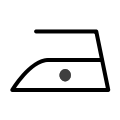
It is important to consider the specific care that should be applied to this type of fabric, which includes washing at a maximum temperature of 40°C, no bleaching, no tumble drying, cool ironing, and dry cleaning except trichloroethylene.
Finally, the printing technology used to manufacture this fabric is polyester sublimation, which allows for color fixation and the creation of high-resolution and durable prints. In this process, the image is printed on transfer paper and transferred to the fabric through a heat press, which allows for sharp, uniform printing with a good level of detail.