Close
Click or press [Enter] to view the results
Trends


Printed Fabrics View articles
Telas en Colores Lisos View articles
Telas para Imprimir View articles
Trends
Printed Fabrics View articles
Telas en Colores Lisos View articles
Telas para Imprimir View articles


Elige colores lisos a juego con tu estampado favorito. ¡Selecciona aquí alguno de los colores principales!
| Material: | 85% Polyester, 12% Polyamide, 3% Elastane |
| Width (cm): | 150 |
| Grammage (g/m²): | 280 |
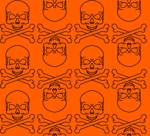
| Pattern: | Skulls, Light |
| Features: | Soft |
| Application / Use: | Chairs, Armchairs, Pants, Overshirts, Cushions |
| Manufacturing Method: | Single-sided digital textile printing, all products are custom-made to order. |
| Care: |
      |
| Notices: |
IMPORTANTE: plazo de recepción de tela base previsto para el 15 de Febrero, todos los pedidos previos de Enero y Febrero se expedirán a partir de esa fecha. |
The Velvety Corduroy Fabric - Dublin stands out as a high-quality corduroy with a composition of 85% polyester, 12% polyamide, and 3% elastane, making it resistant and soft to the touch. The Skull design in Carrot Orange 85.93%, Night Black 7.7%, and Reddish Orange 2.25%, has a shiny texture that provides a striking and unique feel. Other colors that could be combined with it include Burgundy, Turquoise, Leaf Green, Gunmetal Grey, among others. This fabric is printed with the design on one side using digital textile printing, giving it a crisp and high-quality finish.
The fabrics characteristics are its softness and visual sheen, which create a luxurious and cozy look. Meanwhile, the skull design adds a bold and distinctive touch to any garment or decoration in which it is used. The applications or uses for the fabric are wide, adapting to both decoration and womens/mens fashion, upholstery, and accessories. Furthermore, it can be used in making cushions and baskets for the home, providing a unique and elegant touch.
Regarding care, it is recommended to wash at a maximum temperature of 30ºC and not to use bleach. Ironing should be done at a cool temperature, and it cannot be tumble dried. Dry cleaning is advised, with the exception of trichloroethylene.
The printing technology used in this printed corduroy is polyester sublimation, a process that involves transferring ink through heat and pressure. This process causes the ink to turn into gas, allowing for impressive sharpness and definition in textile printing.