Close
Click or press [Enter] to view the results
Trends


Printed Fabrics View articles
Telas en Colores Lisos View articles
Telas para Imprimir View articles
Trends
Printed Fabrics View articles
Telas en Colores Lisos View articles
Telas para Imprimir View articles


| Material: | 100% Organic cotton |
| Width (cm): | 150 |
| Grammage (g/m²): | 110 |
| Features: | Soft, Rigid |
| Application / Use: | Shirts, Dresses, Blouses, Cushions, Table Runners |
| Sustainability certificates: | GOTS |
| Manufacturing Method: | Single-sided digital textile printing, all products are custom-made to order. |
| Care: |
     |
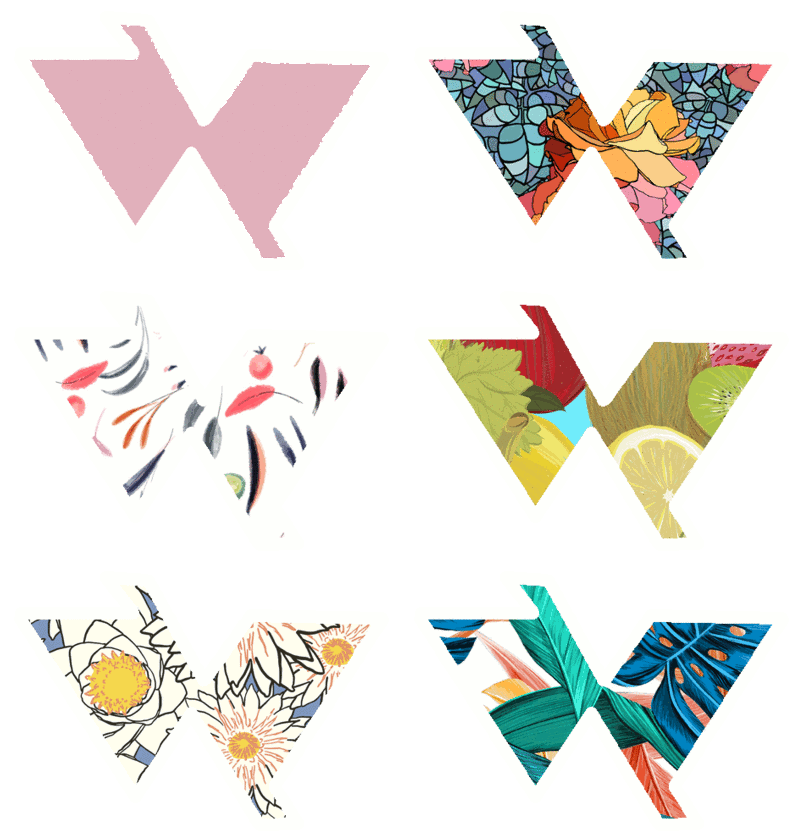
The base fabric is Organic Cotton Poplin - Verona, 150 cm wide and 110 gr/m2 in weight, with a composition of 100% organic cotton and GOTS - ORGANIC CU1016503 certification. The plain printed color is a shade of pink called Seafood Soup, whose CMYK ink attributes are 0 13 26 0, meaning it has a higher amount of magenta and cyan than yellow and black.
This secondary color presents evocative characteristics. Pink conveys delicacy, romanticism, and creativity, while the Seafood Soup shade specifically suggests warmth and comfort. This tone can be particularly well combined with colors such as dark green, navy blue, or grey, providing an appropriate contrast.
It is important to mention that the base fabric is printed with the plain color on one side using digital textile printing, a technique that allows the color to penetrate the fabrics fibers, providing a more durable result than conventional dyeing.
Regarding general characteristics, the base fabric has a soft yet rigid feel and is ideal for making lightweight garments for the summer season. As for the plain color, Seafood Soup is a vibrant and striking tone that provides an attractive touch of color to any garment.
Furthermore, the base fabric is mainly used in fashion for both men and women and in childrens clothing, especially in shirts, dresses, and blouses, due to its texture and lightness.
For fabric care, it is recommended not to bleach, not to exceed a washing temperature of 30ºC, and not to use trichloroethylene in dry cleaning. In addition, it is advised to iron at a cool temperature and tumble dry at a reduced temperature.
Finally, the printing technology used to manufacture this fabric is DIGITAL DIRECT REACTIVE (NATURAL FIBERS), which allows designs to be printed directly onto the base fabric by using reactive inks that adhere effectively to the cotton fibers.