Close
Click or press [Enter] to view the results
Trends


Printed Fabrics View articles
Telas en Colores Lisos View articles
Telas para Imprimir View articles
Trends
Printed Fabrics View articles
Telas en Colores Lisos View articles
Telas para Imprimir View articles


| Material: | 97% Polyester, 3% Elastane |
| Width (cm): | 150 |
| Grammage (g/m²): | 282 |
| Features: | Soft |
| Application / Use: | Knitwear, Tops, T-shirts, Pants, Dresses |
| Manufacturing Method: | Single-sided digital textile printing, all products are custom-made to order. |
| Care: |
     |
The base fabric is Punto Roma Elástico - Lyon, a knitted fabric with a high content of polyester and elastane, which provide great elasticity and comfort when worn. The solid color printed is Llama Yellow, a warm and vibrant tone that corresponds to a CMYK of 0 21 74 0. This color, being secondary, is obtained by mixing magenta and yellow, and can be combined very well with green, blue, or grey tones.
The fabric is digitally printed with the solid color on one side, meaning it is not a dyed fabric but rather printed on one side. This technique allows for precise and detailed results with high resolution.
Regarding its general characteristics, Punto Roma Elástico - Lyon has a soft texture that makes it very pleasant to the touch against the skin. Due to its composition, it is a resistant and easy-care fabric, with a weight of 282 gr/m2 and a width of 150 cm. Additionally, it is suitable for a wide variety of applications, including knitted garments such as sweaters, dresses, pants, tops, t-shirts, as well as for making dining napkins.
Among the attributes of the base fabric, its varied applications and uses stand out. In addition to those already mentioned, it is an ideal fabric for womens and mens fashion garments, particularly for the winter season. Thanks to its elasticity, it can also be used for sportswear and swimwear.
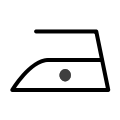
To maintain the quality of the base fabric, it is important to follow the care instructions. It is recommended not to bleach the fabric and to wash it in cold water at a maximum temperature of 30ºC. It should also be air-dried and ironed at a cool temperature. If dry cleaning is desired, it can be done, as long as trichloroethylene is not used.
Finally, the printing technology used for this type of fabric is sublimation, which involves using an inkjet printer to print the design onto special paper, which is then transferred to the fabric using heat and pressure. This process ensures high-quality printing, with sharp definition of details and colors.