Close
Click or press [Enter] to view the results
Trends


Printed Fabrics View articles
Telas en Colores Lisos View articles
Telas para Imprimir View articles
Trends
Printed Fabrics View articles
Telas en Colores Lisos View articles
Telas para Imprimir View articles


| Material: | 96% Polyester, 4% Elastane |
| Width (cm): | 150 |
| Grammage (g/m²): | 220 |
| Features: | Soft, Thin |
| Application / Use: | Shirts, Skirts, Blouses, Dresses, Handkerchiefs |
| Manufacturing Method: | Single-sided digital textile printing, all products are custom-made to order. |
| Care: |
     |
| Notices: |
Existen diferentes tipos de Sarga disponibles sen nuestra web, este tejido es una Sarga fina de bajo gramaje. Recomendamos adquirir una muestra para validar que es la textura que busca. |
The base fabric for this print is the famous Sarga-Prada, a soft and thin textured fabric composed of 96% polyester and 4% elastane, with a weight of 220 gr/m2 and a width of 150 cm. The printed color is a vermilion red with a CMYK of 25 94 75 21. This secondary color is vibrant and eye-catching, perfect for impactful garments and accessories. It combines well with neutral tones such as white, grey, and black, as well as with lighter and darker red and orange tones. It is worth noting that the fabric is printed with the plain color on one side using digital textile printing.
Regarding its characteristics, Sarga-Prada is a soft and resistant fabric, perfect for making womens and mens fashion garments, such as shirts, skirts, blouses, and dresses, as well as for accessories like scarves. Furthermore, it is ideal for summer season garments due to its softness and comfort in warm climates. As for the printed color, its vibrant vermilion red is perfect for garments and accessories that attract attention.
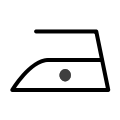
In reference to care, it is important not to bleach the fabric and to wash it at a maximum temperature of 30°C. It allows dry cleaning, except with trichloroethylene, and should be ironed at a low temperature. Tumble drying is not recommended.
The printing technology used is sublimation, which allows for high-quality and durable printing by fixing the colors directly into the fabric fibers, ensuring a sharp and bright image. This is achieved through digital textile printing with water-based inks that penetrate the fabric surface without leaving a surface layer, as is the case with conventional dyeing. In addition, this printing technique is environmentally friendly, as it does not use toxic substances or produce polluting waste during its manufacturing process.