Close
Click or press [Enter] to view the results
Trends


Printed Fabrics View articles
Telas en Colores Lisos View articles
Telas para Imprimir View articles
Trends
Printed Fabrics View articles
Telas en Colores Lisos View articles
Telas para Imprimir View articles


Elige colores lisos a juego con tu estampado favorito. ¡Selecciona aquí alguno de los colores principales!
| Material: | 97% Polyester, 3% Elastane |
| Width (cm): | 146 |
| Grammage (g/m²): | 95 |
| Pattern: | Pictorial, Complex, Black and white, Drawn, Botanist |
| Features: | Brilliant, Smooth, Thin |
| Application / Use: | Shirts, Blouses, Kimono, Accessories, Monkeys |
| Manufacturing Method: | Single-sided digital textile printing, all products are custom-made to order. |
| Care: |
     |
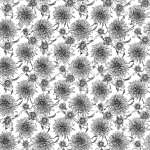
The base fabric is a polyester satin/satin called Raso Ámsterdam. Its black and white patterned design, drawn with main multicolored flowers, is a symbolic and high-quality technical piece. The flowers that compose it are delicate and made with impressive meticulousness. This design can be perfectly combined with solid black, white, pink, green, red, and blue tones.
The fabric is printed with the stamped design on one side by digital textile printing, which means that it is not a double-sided printed fabric but printed on one side. The satin and shiny texture of the fabric looks perfect and the lightness of the 120 gr/m2 grammage makes it a perfect fabric for elegant and comfortable garments. It is also very easy to work both by machine and by hand and adapts perfectly to pleats, gathers, and ruffles.
Among the general characteristics of the fabric and the printed design, we find that the touch is smooth and the flowers seem to be floating on the fabric. Raso Ámsterdam is perfect for fashion garments such as blouses, kimonos, jumpsuits, pants, and pajamas. In addition, its care is very simple following the instructions provided by the manufacturer.
This fabric requires specific care to ensure its good appearance and durability. It is important not to bleach and wash at a maximum temperature of 40ºC. It allows dry cleaning except for trichloroethylene. Ironing should be done with a warm temperature and it is possible to tumble dry at a reduced temperature.
The printing technology used for the manufacture of this fabric is sublimation (polyester). This technique is based on the transfer of ink from a solid to a gaseous state without passing through the liquid state, which allows the design to be printed clearly and durably. This technique is environmentally friendly, does not use aggressive chemicals, and is very efficient in terms of costs and production time.